
Learning letters should feel like a game, not a test. When kids touch, find and build letters, they remember them much faster.
These 10 letter recognition activities are hands-on, quick to set up and easy to repeat. Focus on a few letters at a time, starting with the letters in your child’s name.
1. Letter Hunt
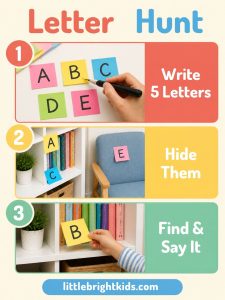
Hunting for letters around the house turns learning into a treasure game.
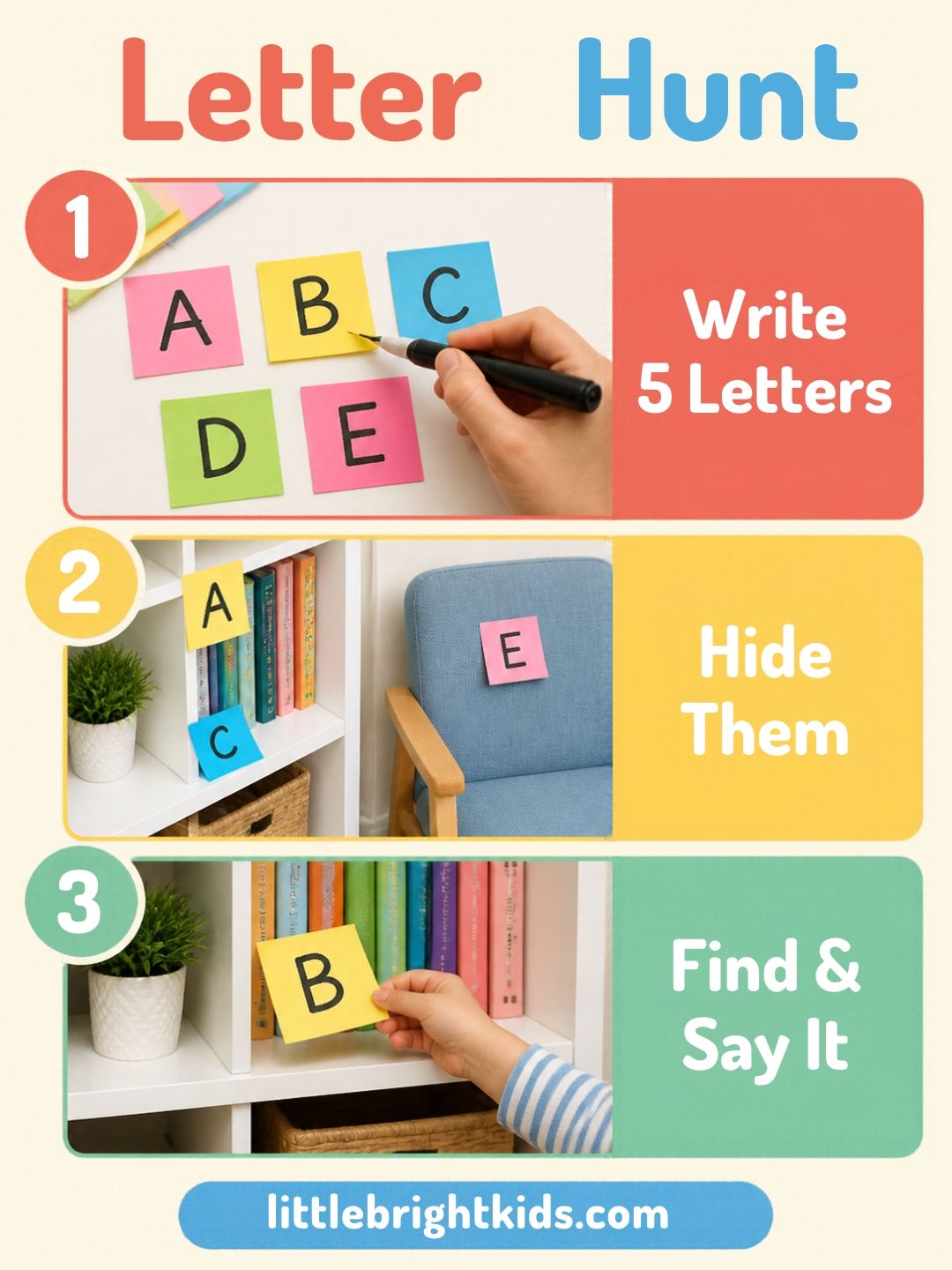
A letter hunt turns letter practice into a treasure hunt. Write five letters on sticky notes, hide them around one room and let your child find each one and say its name or sound. Research on early literacy shows that playful, repeated exposure helps preschoolers learn letters faster than drills.
What your child learns: Children connect letter shapes to names and sounds while moving around, which keeps busy bodies engaged. Searching also builds visual attention.
Make it easier or harder: Start with the letters in your child’s name. Older preschoolers can say a word that starts with each letter they find.
How to play Letter Hunt
- Write 5 letters on sticky notes.
- Hide them around one room.
- Your child finds each one and says the letter.
- Ask them to find something that starts with that letter.
2. Salt Tray Writing
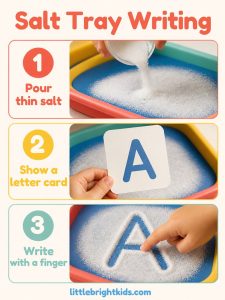
Writing in salt feels great and is easy to erase and try again.
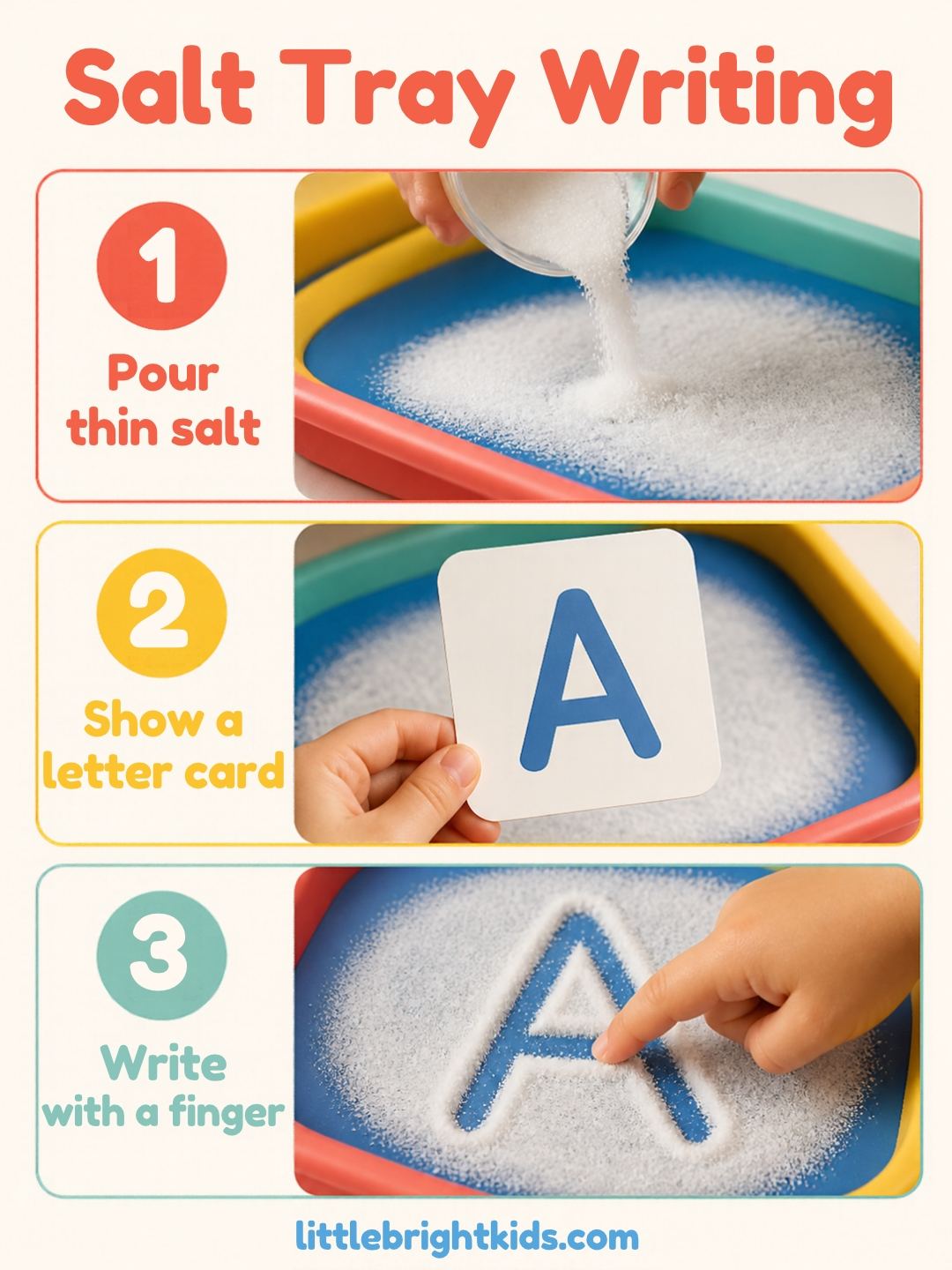
Salt tray writing lets preschoolers trace letters with their fingers before they hold a pencil. Pour a thin layer of salt on a tray, show a letter card and have your child write the letter with one finger, then shake to erase.
What your child learns: Multi-sensory letter writing (seeing, saying and feeling) helps children remember letter shapes. It also builds the finger control needed for writing.
Make it easier or harder: Add a drop of food coloring to the salt for extra fun. Older kids can write short words or their name.
How to play Salt Tray Writing
- Pour a thin layer of salt on a tray.
- Show a letter card.
- Your child writes the letter with one finger.
- Shake the tray to erase and pick the next card.
3. Name Puzzle
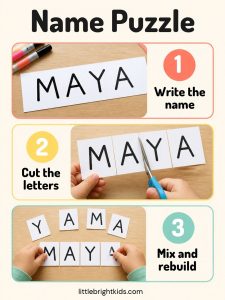
Kids care most about the letters in their own name, so start there.
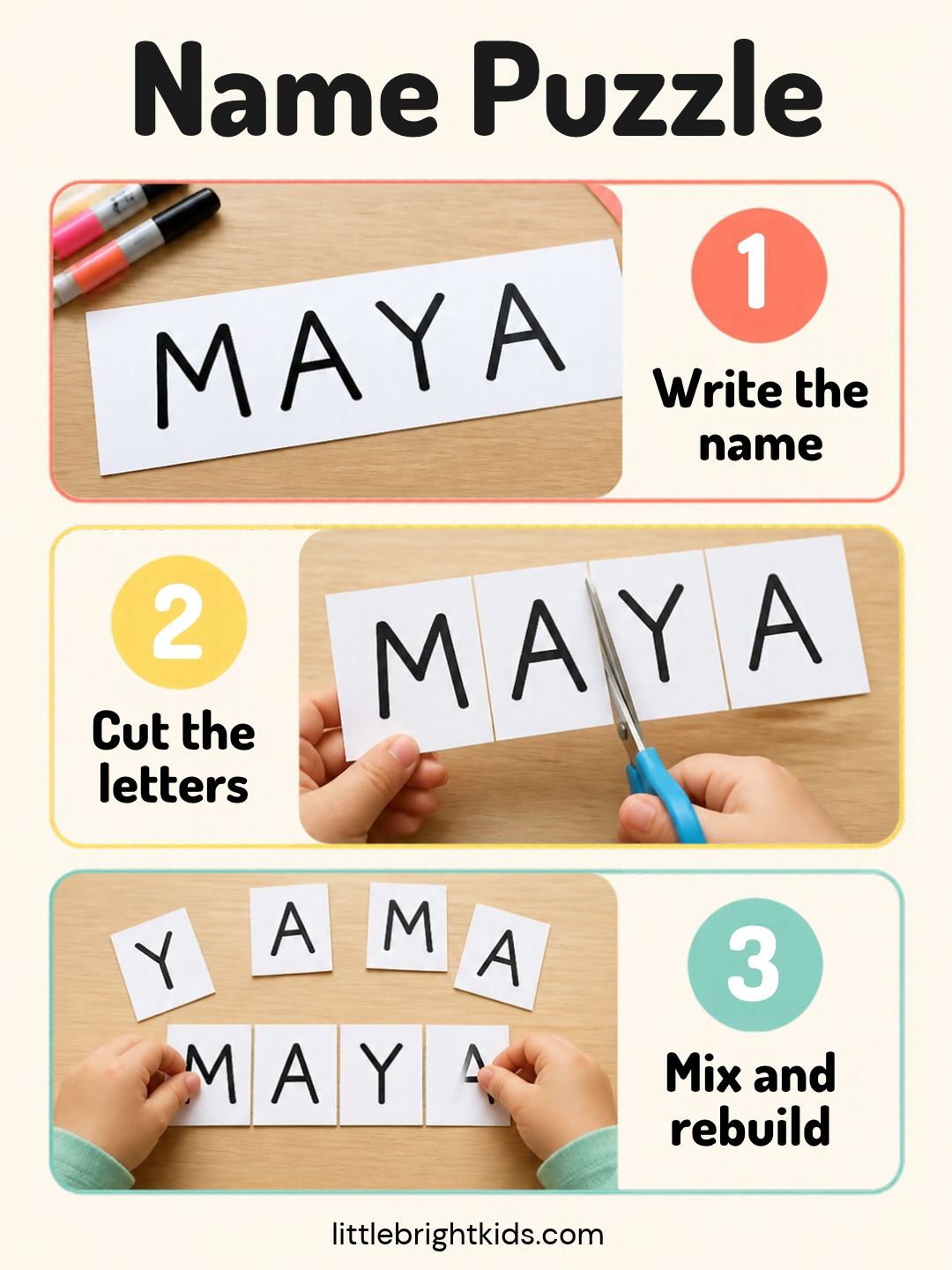
A name puzzle makes a child’s own name the first word they can read and build. Write their name in big letters on a paper strip, cut between the letters, mix them up and help them rebuild it.
What your child learns: A child’s name is usually the most meaningful word they know, so it is a powerful start for letter recognition and letter order.
Make it easier or harder: Keep the first letter a different color for younger kids. Older children can build family names too.
How to play Name Puzzle
- Write their name in big letters on a paper strip.
- Cut between the letters.
- Mix them up and rebuild the name.
🍪 Snack-size game time
Short on time? This game takes less than a minute. Play it with your kiddo, cheer for every right answer and keep reading after.
4. Letter Parking Lot
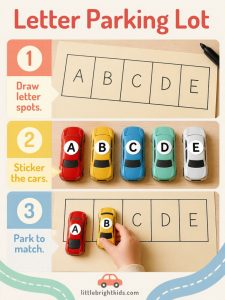
Toy cars make letter matching exciting for vehicle fans.
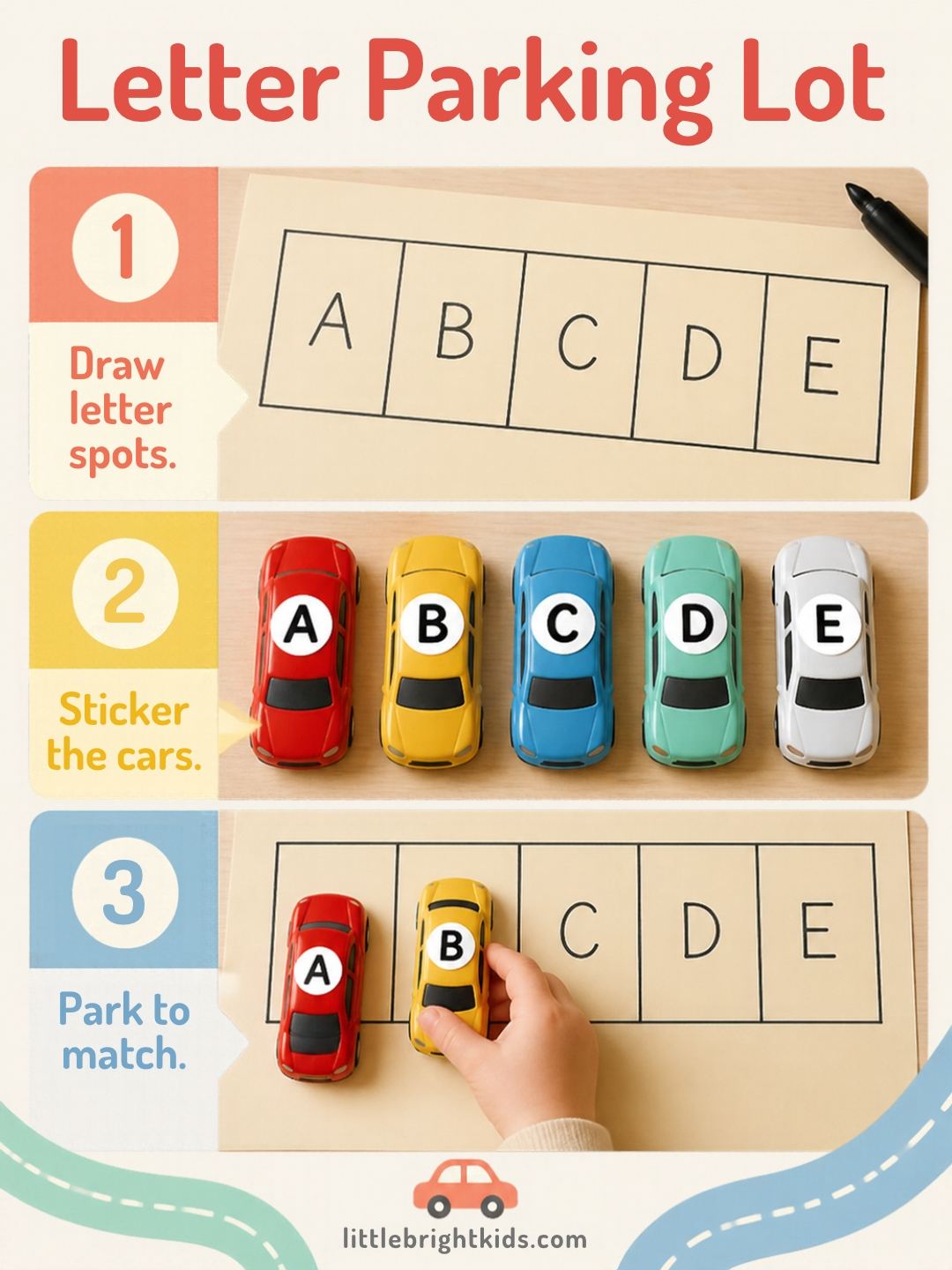
A letter parking lot combines toy cars with letter matching. Draw parking spots with a letter in each, add matching letter stickers to the toy cars, and let your child park each car in its spot.
What your child learns: Matching letters builds visual discrimination, an important pre-reading skill. Driving cars keeps it playful and active.
Make it easier or harder: Use only 4 or 5 letters at first. Older preschoolers can match uppercase cars to lowercase spots.
How to play Letter Parking Lot
- Draw parking spots and write a letter in each.
- Write the same letters on small stickers on the cars.
- Your child parks each car on its matching letter.
5. Alphabet Fishing
Catching letters is fun and practices hand control too.
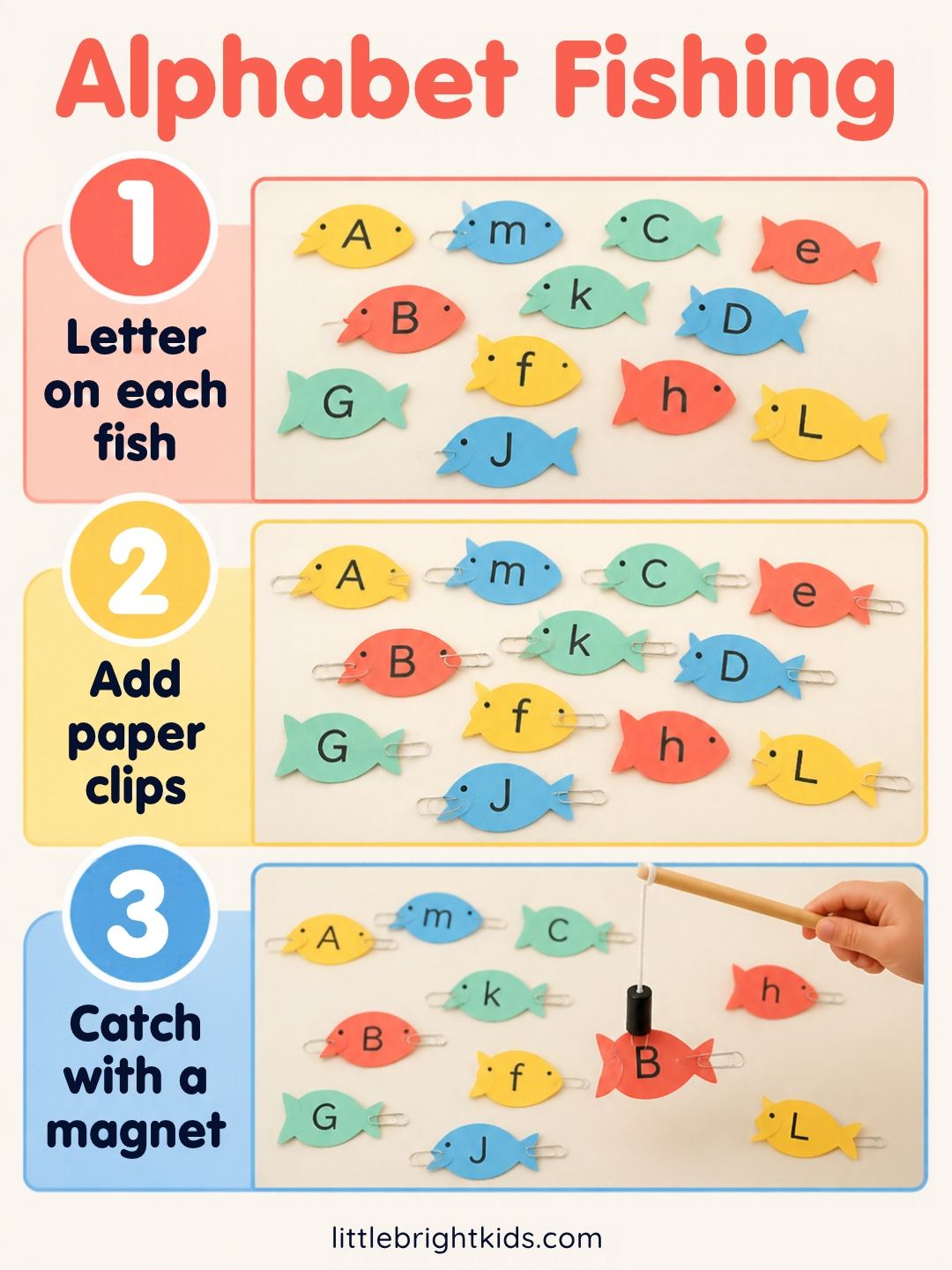
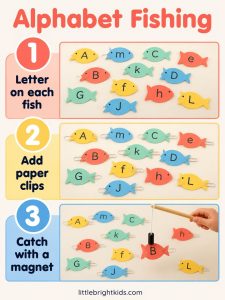
Alphabet fishing is a classic preschool game. Write a letter on each paper fish, add a paper clip, then catch fish with a magnet tied to a stick and name each letter you catch.
What your child learns: Children practice letter names and sounds while building hand eye coordination. Taking turns also builds social skills.
Make it easier or harder: Use a short string and big fish for little ones. Older kids can catch a letter and say a word that starts with it.
How to play Alphabet Fishing
- Write a letter on each paper fish.
- Add a paper clip to each one.
- Catch a fish with a magnet on a string and say the letter.
6. Playdough Letters
Rolling dough into letters helps kids notice every line and curve.
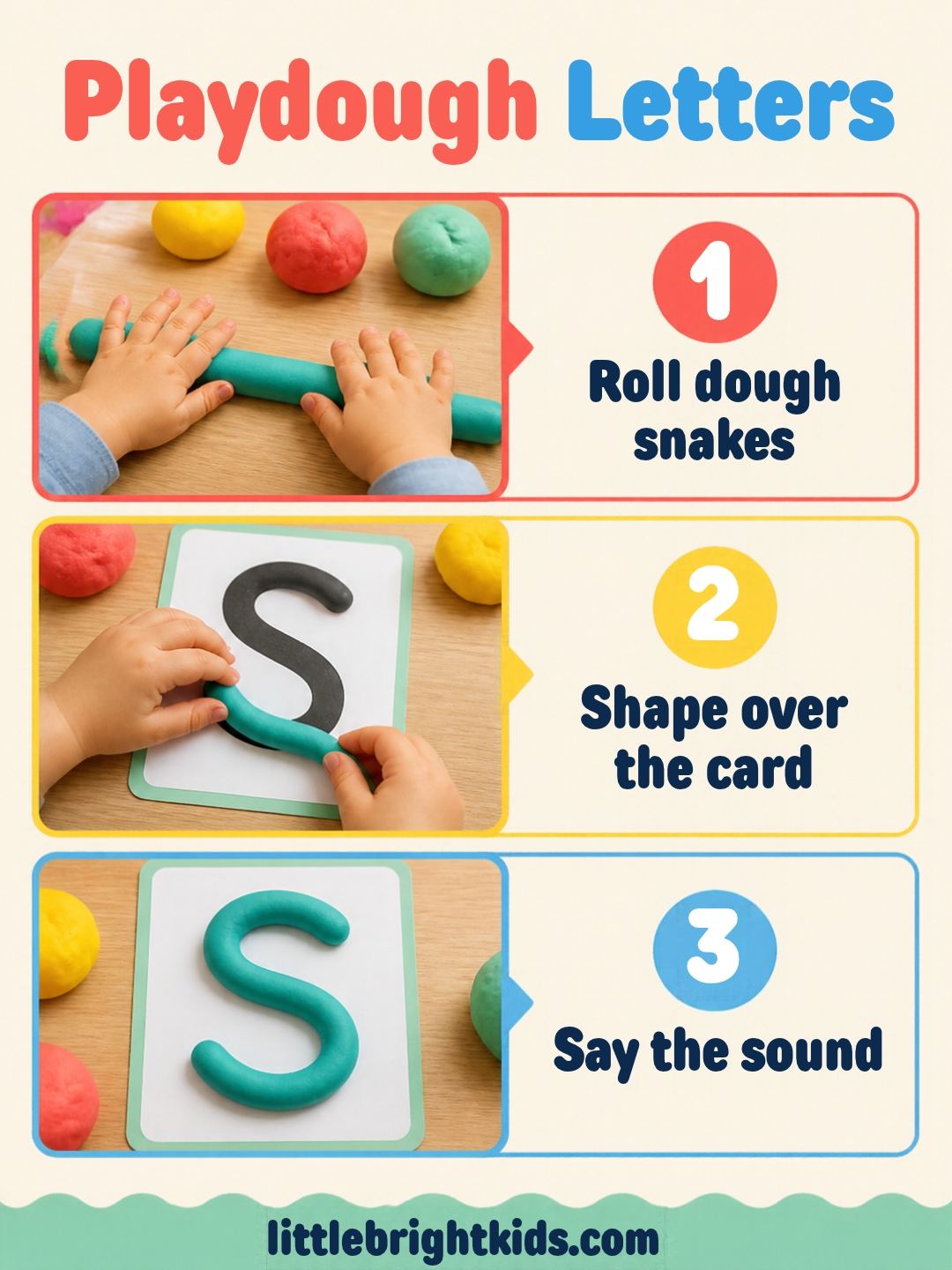
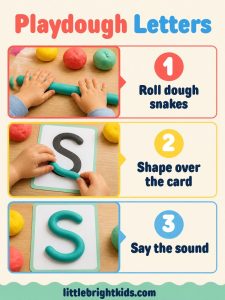
Playdough letters help children feel the shape of each letter. Roll playdough into long snakes, shape them over a large letter card and say the letter sound when it is done.
What your child learns: Rolling and shaping dough strengthens hand muscles needed for writing, while building the letter teaches its parts: lines, curves and humps.
Make it easier or harder: Start with straight line letters like L, T and E. Older children can build the letters of their name.
How to play Playdough Letters
- Roll playdough into long snakes.
- Shape them over a large letter card.
- Say the letter sound when it is done.
7. Letter Jump
Movement plus letters is perfect for wiggly learners.
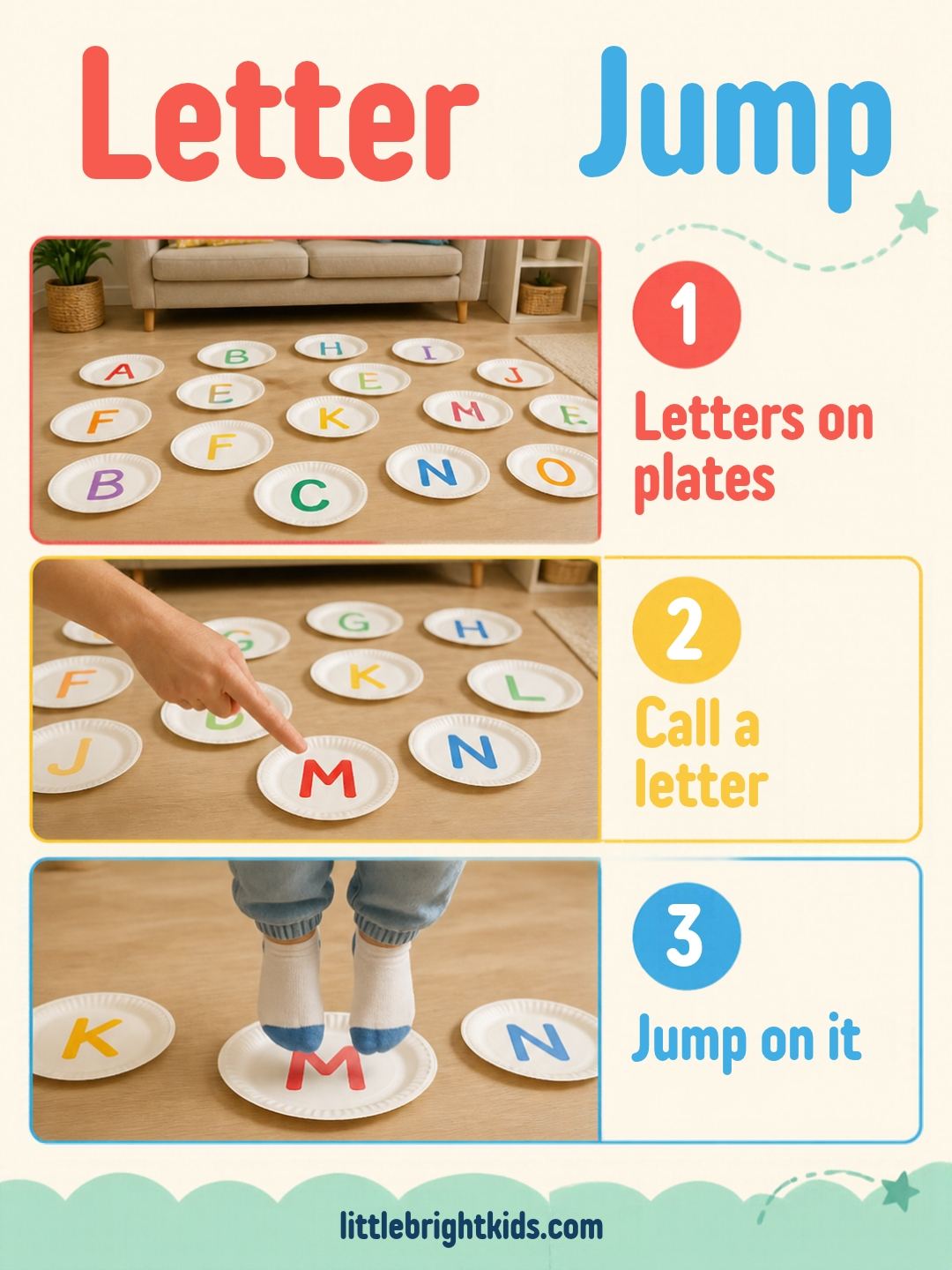
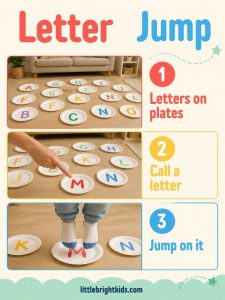
Letter jump is a movement game that helps active kids learn letters. Write letters on paper plates, spread them on the floor, call out a letter and have your child jump onto it.
What your child learns: Pairing movement with learning helps many children remember better and burns energy at the same time.
Make it easier or harder: Use fewer plates for younger kids. Older ones can jump to the letter that starts a word you say.
How to play Letter Jump
- Write letters on paper plates and spread them on the floor.
- Call out a letter.
- Your child jumps onto the right plate.
8. Cookie Cutter Letters
Pressing letter shapes into dough is calm, simple practice.
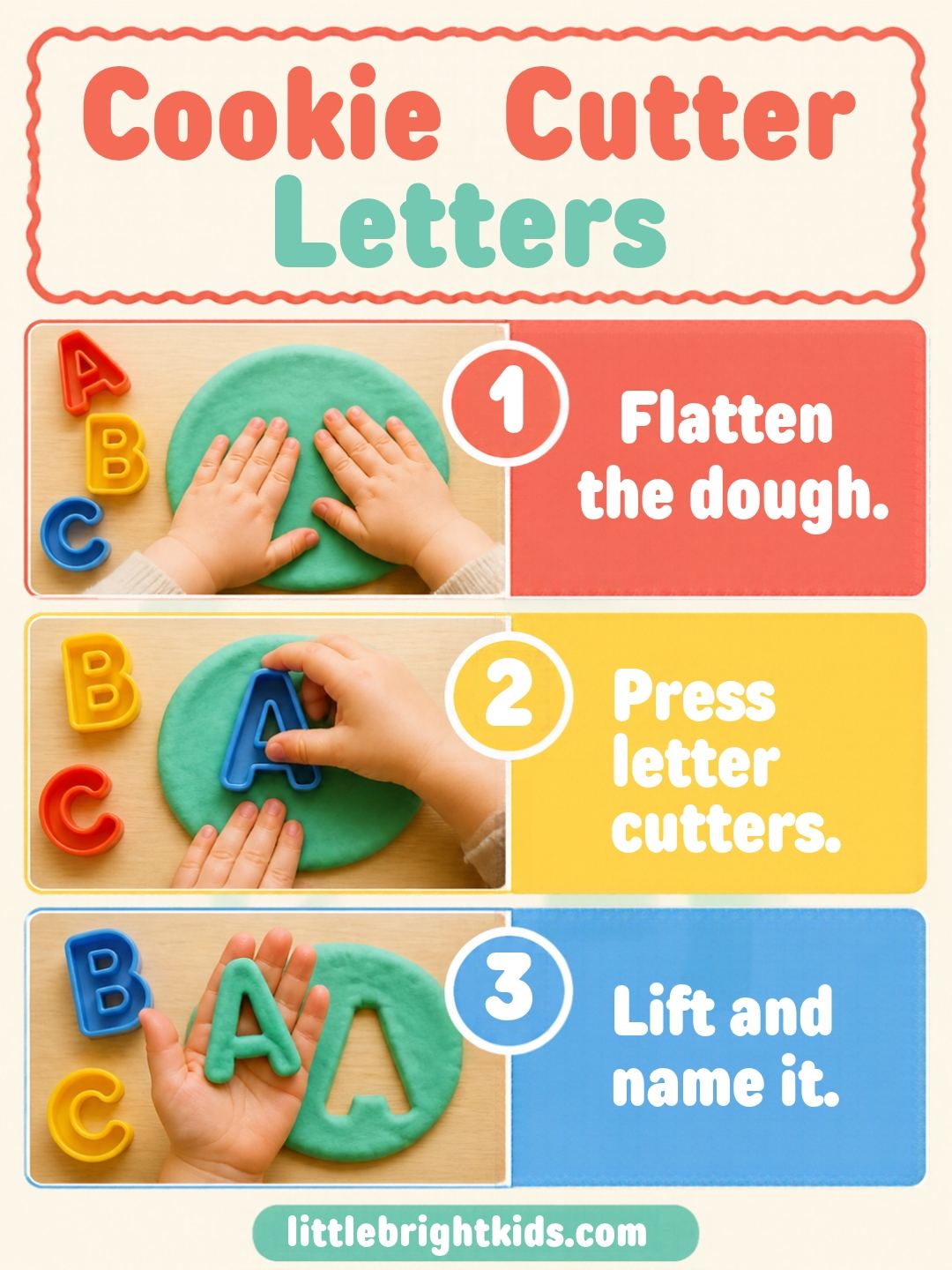
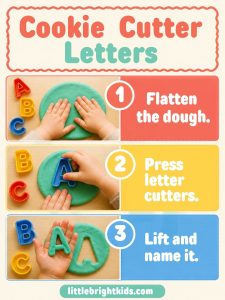
Cookie cutter letters are a hands-on way to explore the alphabet. Flatten a piece of playdough, press letter cutters into it and name each letter as you lift it out.
What your child learns: Pressing cutters builds hand strength and lets children see and touch each letter shape.
Make it easier or harder: Choose just a few letters at a time for younger kids. Older preschoolers can press letters to spell their name.
How to play Cookie Cutter Letters
- Flatten a piece of playdough.
- Press letter cutters into it.
- Name each letter as you lift it out.
9. Letter Sort Box
Sorting builds closer looking at letter shapes.
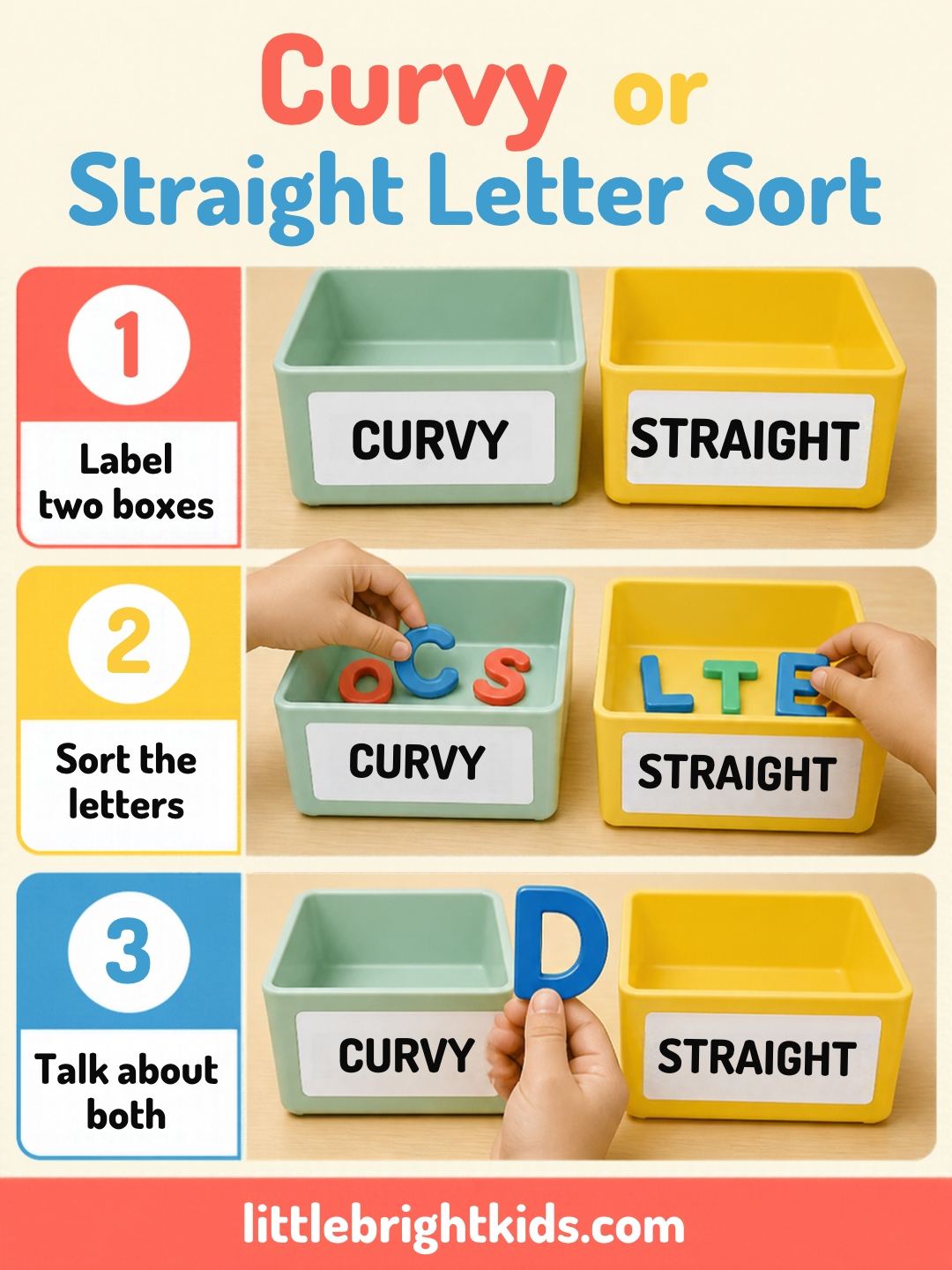
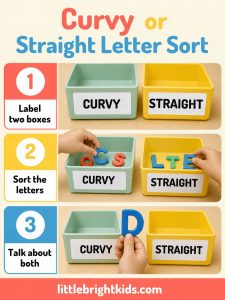
A letter sort box helps children notice how letters are built. Label one box “curvy” and one “straight”, sort letter cards or magnets into the right box, and talk about letters that have both.
What your child learns: Sorting by features is a key visual discrimination skill that helps children tell similar letters apart, like b and d.
Make it easier or harder: Use only uppercase letters at first. Older children can make a third box for letters with both curves and lines.
How to play Letter Sort Box
- Label one box "curvy" and one "straight".
- Sort the letters into the right box.
- Talk about letters that have both.
10. Book Letter Spy
Finding letters in real books connects learning to reading.
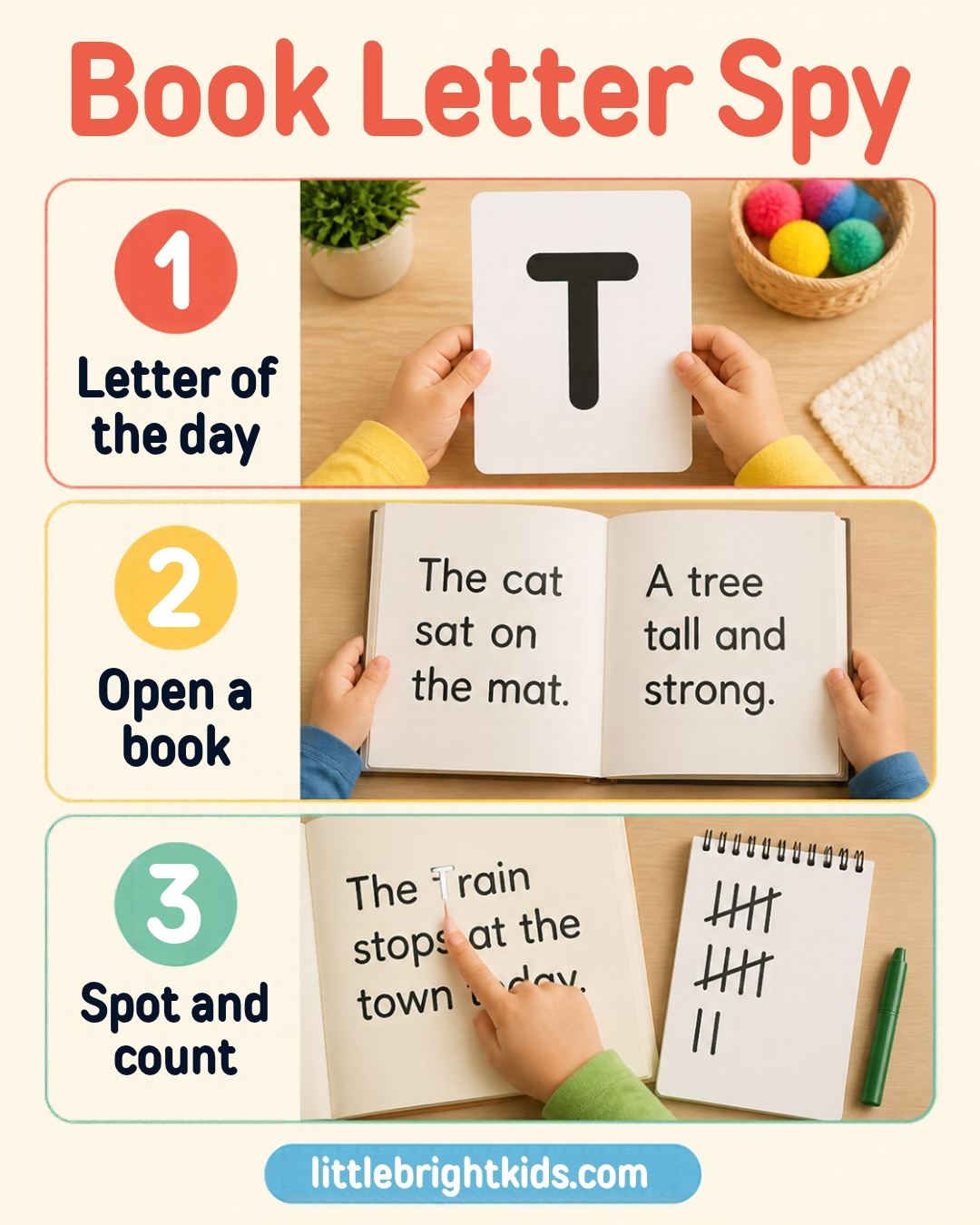
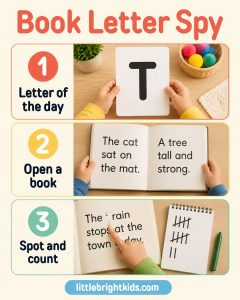
Book letter spy brings letter learning into story time. Pick a letter of the day, open a picture book together and count how many times you can spot that letter.
What your child learns: Finding letters in real text shows children that letters make up words, an important early reading idea. Counting adds math too.
Make it easier or harder: Pick a big, simple book for younger kids. Older preschoolers can spot the letter and read the word it is in.
How to play Book Letter Spy
- Pick a letter of the day.
- Open a picture book together.
- Count how many times you can spot that letter.
10 ideas at a glance
| Activity | Ages | Time | Level |
|---|---|---|---|
| Letter Hunt | 3 to 5 | 10 min | Easy |
| Salt Tray Writing | 3 to 5 | 10 min | Easy |
| Name Puzzle | 3 to 4 | 10 min | Easy |
| Letter Parking Lot | 3 to 5 | 10 min | Easy |
| Alphabet Fishing | 3 to 5 | 15 min | Easy |
| Playdough Letters | 3 to 5 | 15 min | Easy |
| Letter Jump | 3 to 5 | 10 min | Easy |
| Cookie Cutter Letters | 3 to 5 | 15 min | Easy |
| Letter Sort Box | 4 to 5 | 15 min | Easy |
| Book Letter Spy | 4 to 5 | 10 min | Easy |
Hands-on letter recognition activities for preschoolers include a letter hunt, salt tray writing, a name puzzle, a letter parking lot and alphabet fishing. Each takes about 10 to 15 minutes.
Free printables to practice at home
Pair the games with tracing pages for a calm, quiet practice time.
Tips for teaching letters
Start with your child’s name. Those letters matter most to them and show up everywhere.
Teach a few letters at a time and come back to them often. Repetition in short games works better than long lessons.
Say the letter name and its sound together, like B says buh. It helps with reading later.
Questions parents ask
When should a child recognize letters?
Many children recognize some letters by age 3 to 4 and most of the alphabet by age 5. Every child learns at their own pace.
How do I teach letter recognition at home?
Use short hands-on games like letter hunts, salt tray writing and playdough letters. Start with the letters in your child’s name.
Should I teach uppercase or lowercase first?
Many parents start with uppercase because the shapes are simpler, then add lowercase. Using both in daily life is fine too.