

If you have playdough, you have an activity. It is soft, squishy and endlessly fun for little hands.
These 5 simple playdough games come straight from our pin. No fancy tools needed, just dough and a few things from your kitchen and toy box.
1. Roll Long Snakes
Rolling with flat hands builds arm and hand strength.
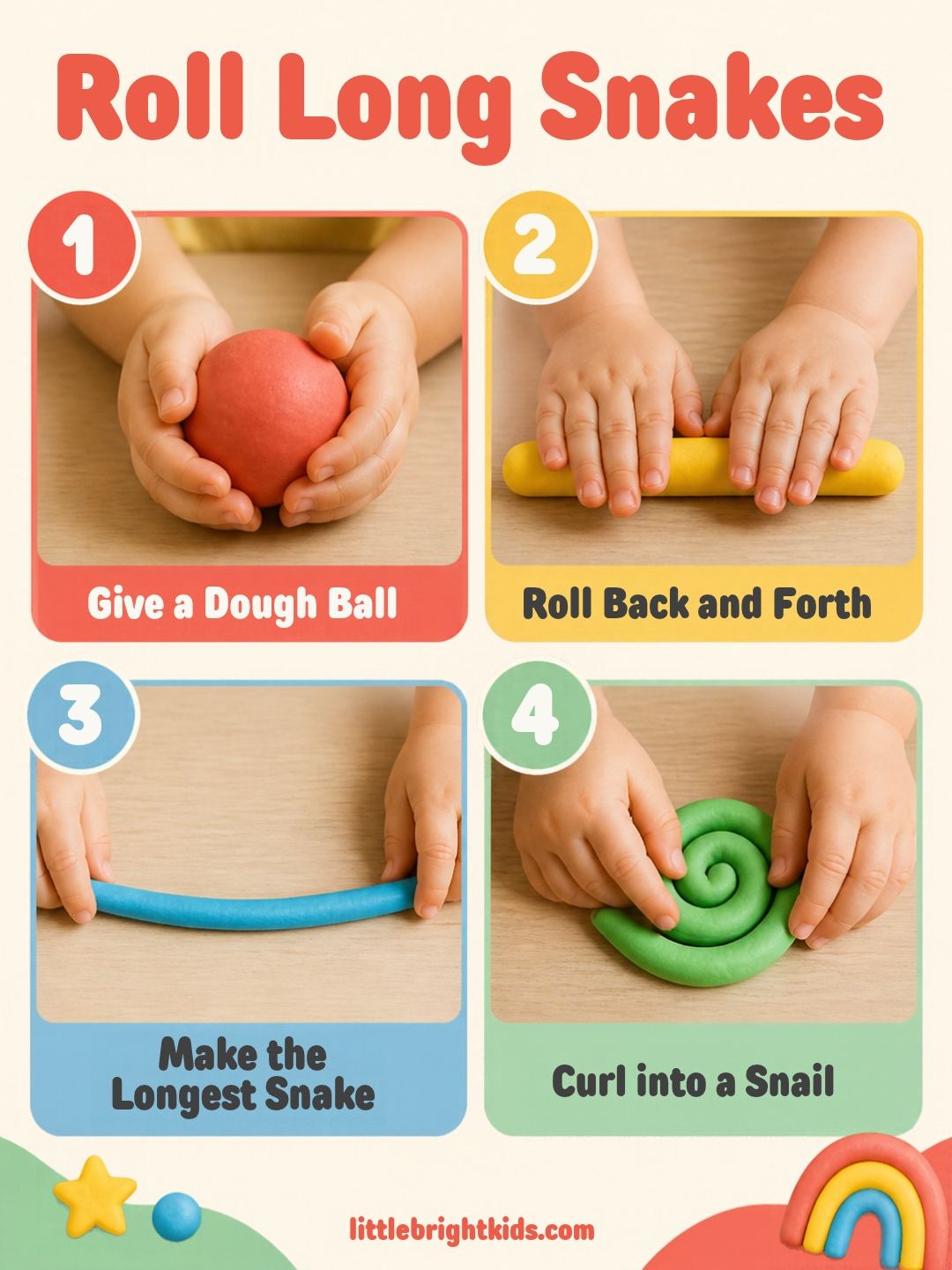
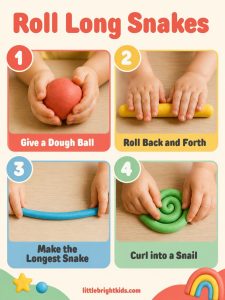
Rolling playdough snakes is the classic first playdough skill. Your toddler rolls a ball of dough back and forth on the table until it stretches into a long snake. Racing to make the longest one adds giggles, and curling it into a circle or snail shell makes a fun finish.
What your child learns: Rolling uses both hands together and strengthens the palms and fingers. This bilateral coordination supports later skills like cutting with scissors and holding paper while drawing.
Make it easier or harder: Show the motion with your hands over theirs for young toddlers. Older children can make letters from their snakes or roll very thin worms.
How to play Roll Long Snakes
- Give your toddler a ball of dough.
- Show them how to roll it back and forth on the table.
- See who can make the longest snake.
- Curl the snake into a circle or a snail.
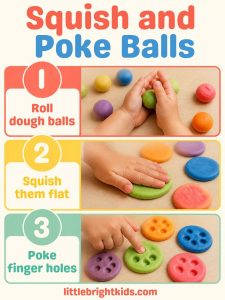
2. Squish and Poke Balls
Poking with one finger is great practice for pointing and the pincer grip.
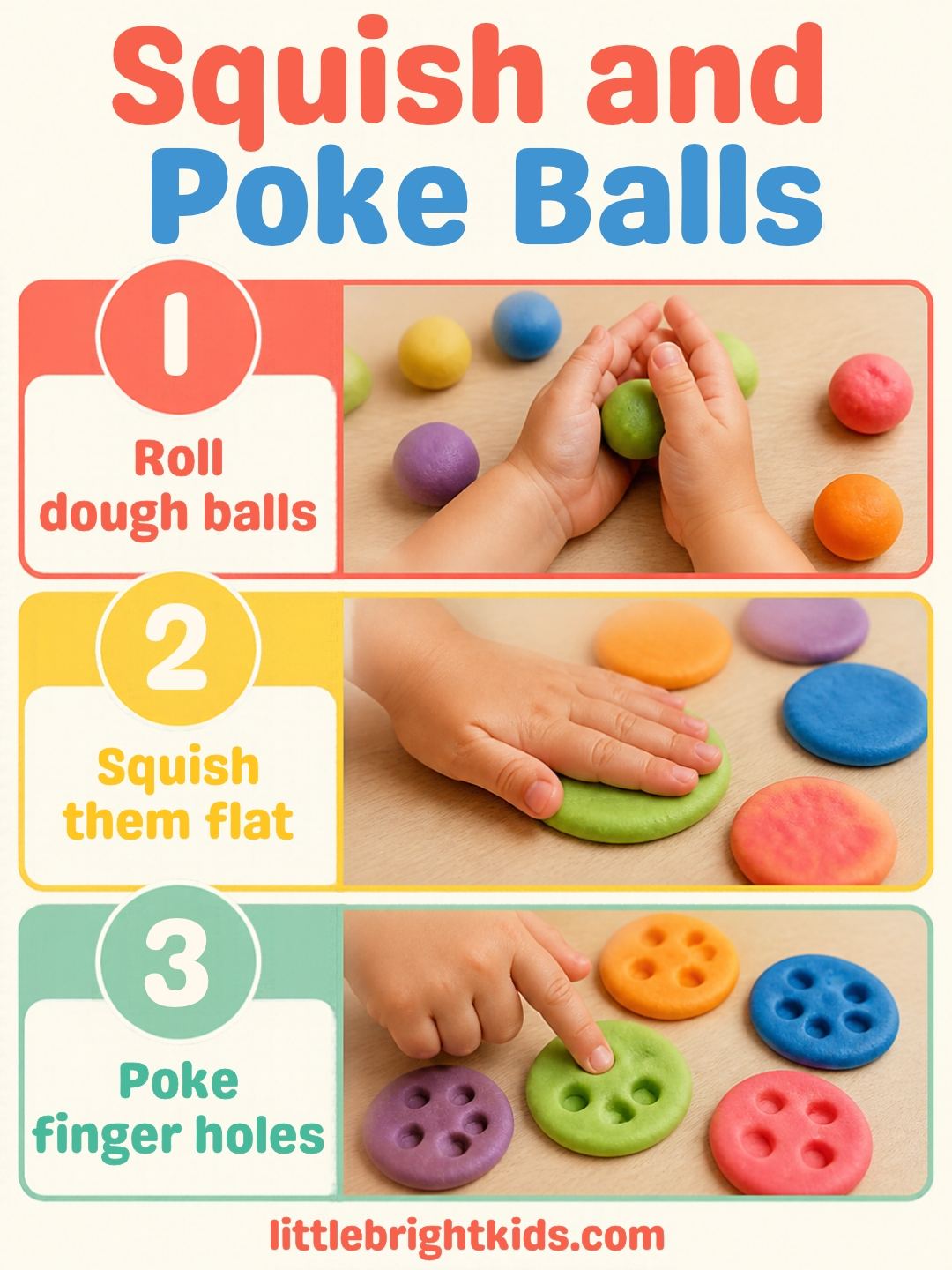
Squishing and poking is pure sensory fun for little hands. Roll small balls of dough, let your toddler squish each one flat with a palm and then poke holes with one finger. The soft resistance of the dough is satisfying and calming.
What your child learns: Pressing with the palm builds hand strength, and poking with one finger trains finger isolation, the same skill used to point, press buttons and later hold a pencil.
Make it easier or harder: Make bigger balls for younger toddlers. Older kids can poke a set number of holes, such as three, or press in small beads.
How to play Squish and Poke Balls
- Roll small balls of dough.
- Squish each one flat with a palm.
- Poke holes with one finger.
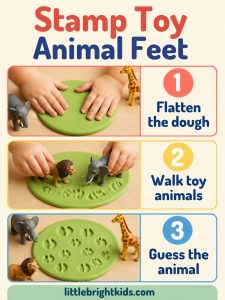
3. Stamp Toy Animal Feet
Kids love seeing which animal made which footprint.
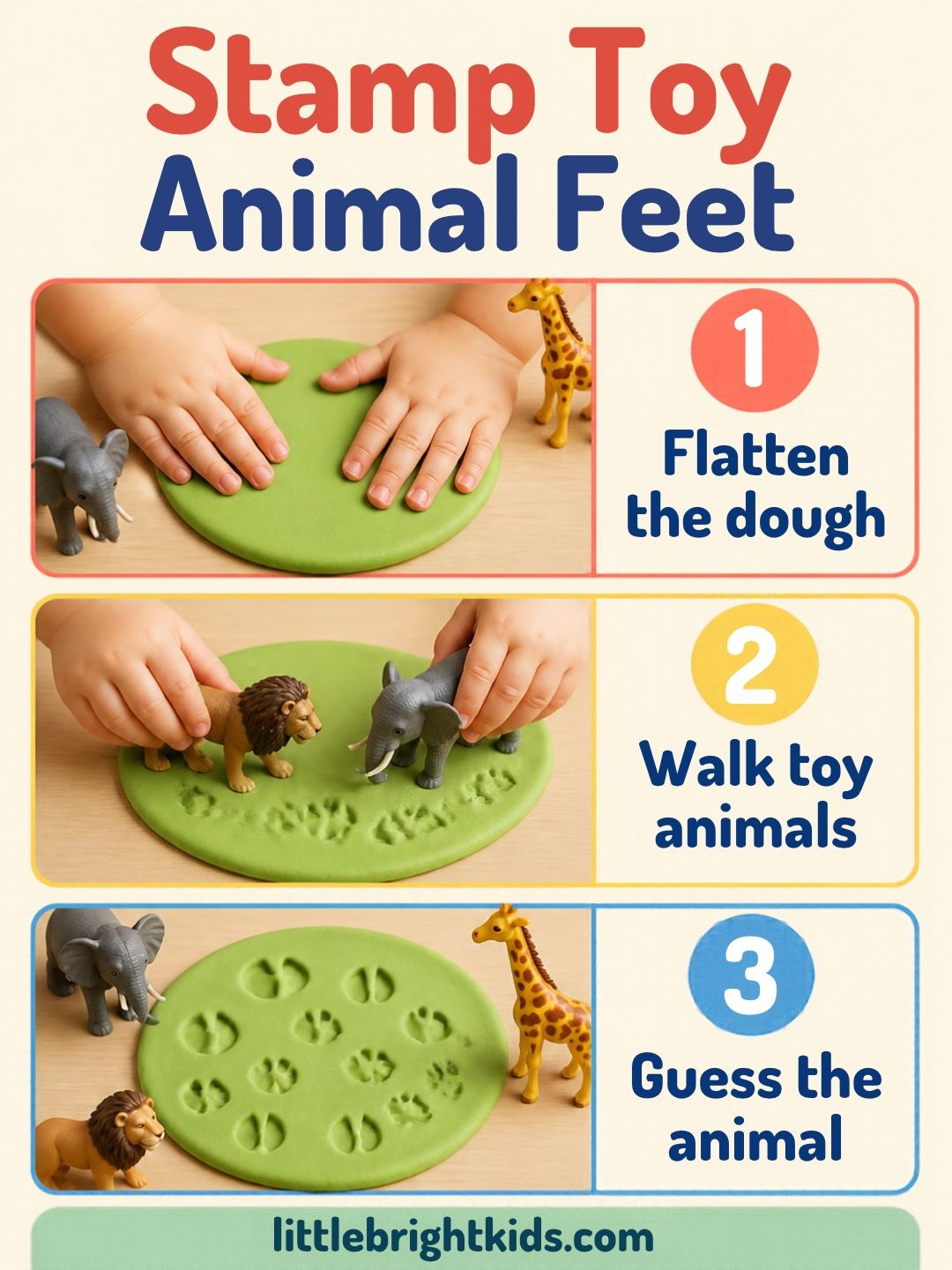
Toy animal footprints turn playdough into a little science game. Flatten the dough, walk toy animals across it and look closely at the prints they leave. Guessing which animal made each footprint keeps toddlers curious.
What your child learns: Comparing footprints builds observation and early science skills. Talking about big feet, small feet and animal names also grows vocabulary.
Make it easier or harder: Use two or three very different animals for toddlers. Older children can match prints to animals with their eyes closed or make a footprint trail.
How to play Stamp Toy Animal Feet
- Flatten the dough into a pancake.
- Walk toy animals across it.
- Look at the footprints and guess which animal made them.
🎉 Fun break! Time for a silly little game
Three activities down already. Your brain deserves a tiny party! Grab your little one, play this one minute game together, then scroll on for more ideas.
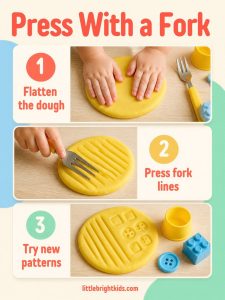
4. Press With a Fork
Simple patterns show cause and effect in a fun way.
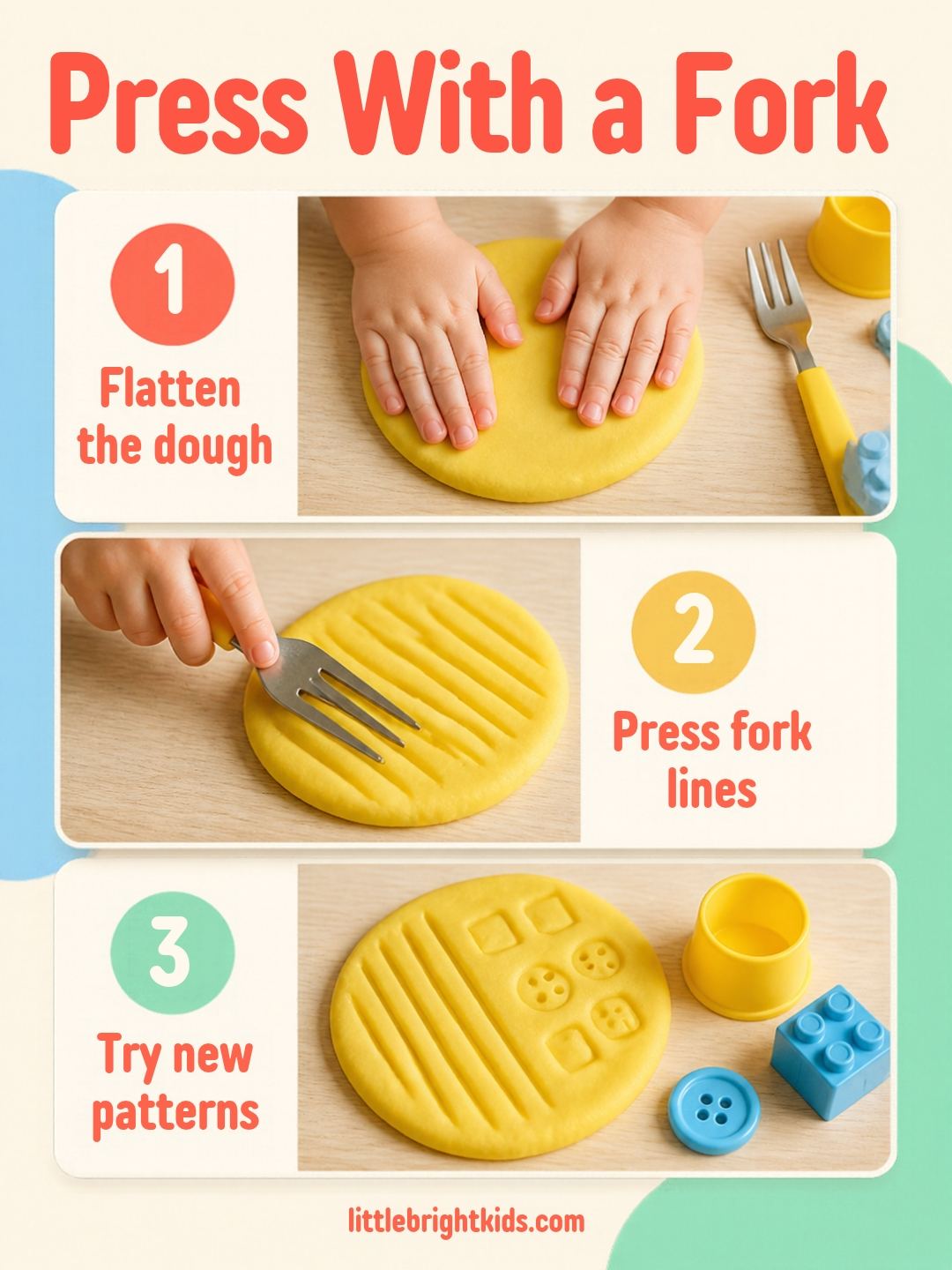
Pressing a fork into flat playdough creates instant patterns that toddlers love. Once they see the lines, try a cup, a button or a toy block to make circles, dots and squares. Everyday kitchen items become pattern tools.
What your child learns: Pressing tools into dough builds hand control and teaches cause and effect. Noticing the different shapes each item makes is early pattern and shape learning.
Make it easier or harder: Give one tool at a time for younger toddlers. Older children can make a row of repeating shapes or press patterns into a playdough cookie.
How to play Press With a Fork
- Flatten a piece of dough.
- Press a fork into it to make lines.
- Try a cup, a button or a toy block for new patterns.
5. Mix 2 Colors Into 1
Mixing colors is a little bit of science and a lot of fun.

Mixing two colors of playdough feels like magic to a toddler. Give two small balls, such as blue and yellow, and let your child squish and roll them together until a new color appears. Talk about what changed as the colors blend.
What your child learns: This is a simple first lesson in color mixing and cause and effect. Kneading the dough together also gives the hands a strong workout.
Make it easier or harder: Start with blue and yellow to make green for a clear result. Older kids can predict the new color before mixing and try red with yellow or red with blue.
How to play Mix 2 Colors Into 1
- Give two small balls of different colors.
- Squish and roll them together.
- Watch a new color appear.
💡 Try yellow and blue to make green.
5 games at a glance
| Game | Ages | Time | Level |
|---|---|---|---|
| Roll Long Snakes | 18 months to 3 | 5 min | Easy |
| Squish and Poke Balls | 18 months to 3 | 5 min | Easy |
| Stamp Toy Animal Feet | 2 to 3 | 10 min | Easy |
| Press With a Fork | 2 to 3 | 5 min | Easy |
| Mix 2 Colors Into 1 | 2 to 3 | 10 min | Easy |
Five easy playdough games for toddlers are rolling long snakes, squishing and poking balls, stamping toy animal feet, pressing patterns with a fork and mixing two colors into one. Each takes 5 to 15 minutes.
Free printables to practice at home
Calm printables are a nice way to wind down after squishy play.
Tips for playdough with toddlers
Make a no-cook batch with 2 cups flour, ½ cup salt, 2 tbsp oil and about ¾ cup warm water.
Use a tray or placemat so the dough stays in one area.
Store the dough in a sealed bag so it stays soft for weeks.
Questions parents ask
At what age can toddlers play with playdough?
Many toddlers can start around 18 months with close supervision. Homemade dough is a good choice because you know what is in it.
What are the benefits of playdough?
Playdough builds hand strength, fine motor skills, creativity and focus, and it can be very calming.
How do I stop my toddler from eating playdough?
Stay close, redirect gently and choose homemade, taste-safe dough while they are still learning.