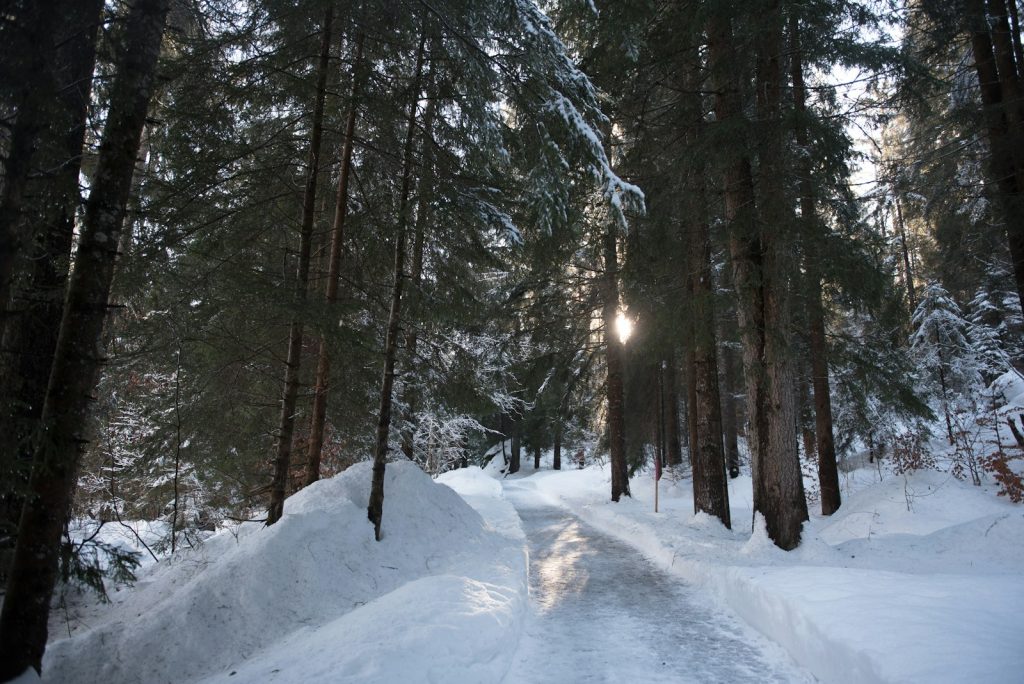
A winter walk looks quiet, but nature is full of surprises: frosty leaves, animal tracks, evergreen trees and bright red berries. These winter nature walk activities give kids something to look for and talk about.
Dress warmly, keep walks short for little ones and bring a bag for treasures.
1. Winter Scavenger Hunt
Look for winter things like pine cones, frost and berries.
A winter scavenger hunt gives every walk a goal. Make a picture list with a pine cone, evergreen, berry, feather and frost, and check off each one as you find it. Time outdoors in winter is good for children’s mood, sleep and attention. Dress in warm layers and keep walks short and fun.
What your child learns: Searching for items builds observation, vocabulary and patience.
Make it easier or harder: Use 4 or 5 items for younger kids. Older kids can add a “find something round” challenge.
How to try Winter Scavenger Hunt
- Make a picture list: pine cone, evergreen, berry, feather, frosty leaf, animal track.
- Give your child the list and a bag.
- Tick off each thing you find.
- Look at your treasures at home.
2. Animal Track Spotting
Look for prints in snow or mud and guess who made them.
Animal track spotting turns kids into nature detectives. Walk slowly near trees, parks or gardens and look for prints in snow or mud.
What your child learns: Guessing which animal made a track builds reasoning and science knowledge.
Make it easier or harder: Bring a track guide or photos. Take pictures of tracks to compare later.
How to try Animal Track Spotting
- Walk slowly near trees, parks or gardens.
- Look for prints in snow or soft mud.
- Talk about their size and shape.
- Guess which animal made them.
3. Nature Color Hunt
Match colors in nature to paint chip cards.
A nature color hunt shows winter is not just white. Bring a few paint color cards and look for something in nature that matches each one.
What your child learns: Matching colors builds visual discrimination and attention to detail.
Make it easier or harder: Use 3 or 4 cards for little ones. Talk about why some colors are hard to find in winter.
How to try Nature Color Hunt
- Bring a few paint color cards.
- Look for something in nature that matches each color.
- Talk about the colors of winter.
- Take photos of your matches.
🎉 Fun break! Time for a silly little game
Three activities down already. Your brain deserves a tiny party! Grab your little one, play this one minute game together, then scroll on for more ideas.
4. Icicle and Frost Exploring
Look closely at frost, ice and icicles.
Icicle and frost exploring looks closely at ice. On a cold morning, look for frost on leaves, cars and grass, and use a magnifying glass to see the crystals.
What your child learns: Looking closely at frost shows water freezing into crystal shapes.
Make it easier or harder: Do not let kids lick icicles. Take photos to compare on different days.
How to try Icicle and Frost Exploring
- Look for frost on leaves, cars and grass on a cold morning.
- Use a magnifying glass to see the patterns.
- Find icicles hanging from roofs or branches, but do not stand under big ones.
- Talk about why they form.
5. Stick Collecting and Building
Collect sticks and build letters, shapes or a tiny fort.
Stick collecting and building mixes math and play. Collect sticks of different sizes, line them up from short to long and build shapes or a little house.
What your child learns: Ordering by length builds early measuring skills, and building adds engineering.
Make it easier or harder: Check sticks for sharp ends. Count the sticks in each shape.
How to try Stick Collecting and Building
- Collect sticks of different sizes.
- Line them up from short to long.
- Make letters or shapes with them.
- Build a mini fort for a toy animal.
6. Nature Walk Journal
Draw and write what you saw on your walk.
A nature walk journal helps kids remember their walk. After the walk, sit with a notebook, draw your favorite thing and talk about what you saw.
What your child learns: Drawing and describing build memory and language.
Make it easier or harder: Write their words for younger kids. Older kids can label their drawings.
How to try Nature Walk Journal
- After the walk, sit with a notebook.
- Draw your favorite thing you saw.
- Write one word or sentence about it.
- Compare walks over the winter.
6 nature walk activities at a glance
| Activity | Ages | Time | Level |
|---|---|---|---|
| Winter Scavenger Hunt | 2 to 10 | 30 min | Easy |
| Animal Track Spotting | 3 to 10 | 20 min | Easy |
| Nature Color Hunt | 2 to 8 | 20 min | Easy |
| Icicle and Frost Exploring | 3 to 10 | 15 min | Easy |
| Stick Collecting and Building | 2 to 8 | 20 min | Easy |
| Nature Walk Journal | 4 to 10 | 15 min | Easy |
Fun winter nature walk activities for kids include a winter scavenger hunt, animal track spotting, a nature color hunt, exploring icicles and frost, stick collecting and building, and a nature walk journal.
Free printables to go with this
Print one of these free sheets to keep the learning going after the activity. No sign-up needed for the downloads below.
Dress for the weather
Wear layers, waterproof boots, a hat and mittens. Keep walks short for toddlers and turn back before kids get cold.
Leave no trace
Collect only fallen items, never pick living plants, and leave nature as you found it.
Questions parents ask
What can kids find on a winter nature walk?
Pine cones, evergreen trees, berries, frost, icicles, feathers, animal tracks and bird nests.
How do you make a winter scavenger hunt?
List or draw 6 to 10 winter nature items and let kids tick them off as they find them.
How long should a winter walk be for kids?
20 to 30 minutes is good for young children, longer for older kids if they are warm.
How can kids identify animal tracks?
Look at size, number of toes and the pattern of steps, and compare them with a simple tracks guide.
Is it safe to touch icicles?
Small low icicles are fine to look at. Never stand under large icicles hanging from roofs.