Red and yellow make orange. Blue and yellow make green. Watching colors mix feels like magic to preschoolers. These color mixing activities teach primary and secondary colors through hands-on play.
Start with just the three primary colors: red, yellow and blue.
1. Paint Mixing Palette
Mix two colors at a time and paint the results.
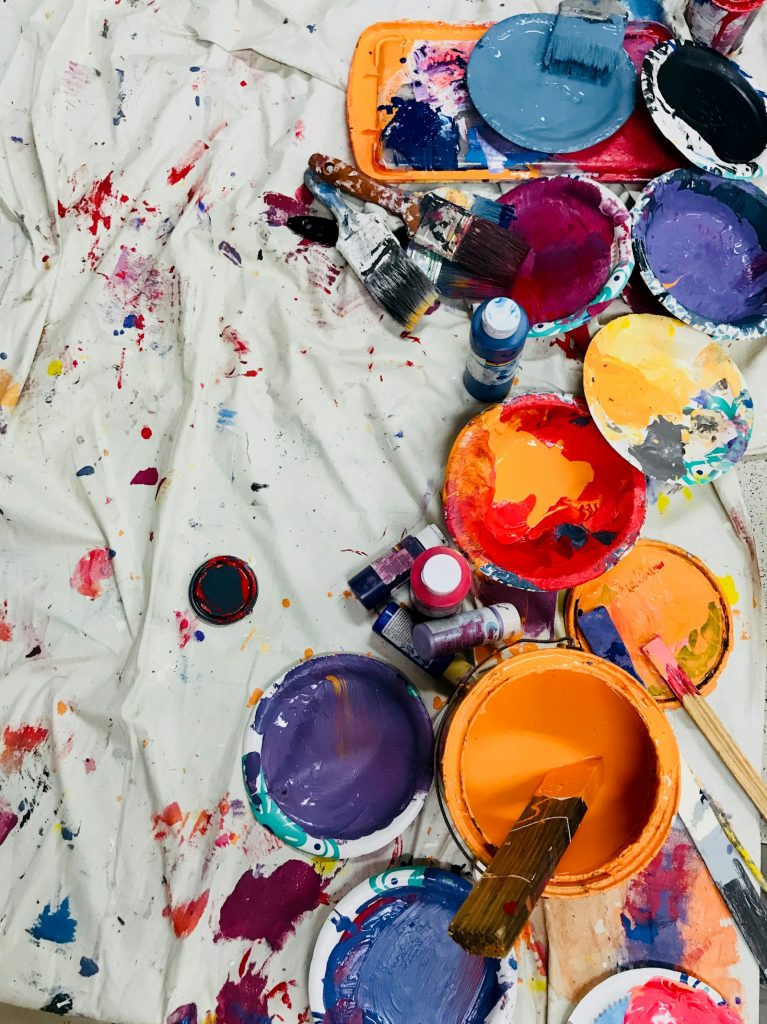
A paint mixing palette is the classic way to learn colors. Put red, yellow and blue paint on a plate, mix a little red and yellow with a brush and see what color appears. Red, yellow and blue are the primary colors. Mixing any two makes a secondary color: red and yellow make orange, yellow and blue make green, and red and blue make purple.
What your child learns: Mixing colors themselves helps children remember color names and builds curiosity.
Make it easier or harder: Ask them to guess the new color before mixing. Paint a picture with the new colors.
How to try Paint Mixing Palette
- Put red, yellow and blue paint on a plate.
- Mix a little red and yellow with a brush.
- Paint a swatch of the new color.
- Try every pair.
2. Color Mixing Bags
Squish two colors in a bag with no mess.
Color mixing bags are mess-free. Put blobs of two primary colors in a zip bag, seal it, tape it to a window and squish until the colors blend.
What your child learns: Pressing and seeing colors change builds cause and effect understanding.
Make it easier or harder: Double bag and tape all edges. Try all three color pairs.
How to try Color Mixing Bags
- Put blobs of two primary colors in a zip bag.
- Seal it and tape the top.
- Squish the colors together.
- Name the new color.
3. Walking Water Rainbow
Water walks up paper towels and mixes colors.
Walking water rainbow shows colors traveling and mixing. Set 6 cups in a circle, fill every other cup with colored water and connect them with folded paper towels.
What your child learns: Water climbs the towels by capillary action and mixes into new colors in the empty cups.
Make it easier or harder: Check every hour. It takes a few hours to fully mix.
How to try Walking Water Rainbow
- Set 6 cups in a circle and fill every other cup with colored water.
- Fold paper towels into strips.
- Bridge each full cup to an empty cup with a strip.
- Watch the colors travel and mix over a few hours.
🍪 Snack-size game time
Short on time? This game takes less than a minute. Play it with your kiddo, cheer for every right answer and keep reading after.
4. Ice Cube Color Mixing
Melting colored ice cubes mix into new colors.
Ice cube color mixing is slow and beautiful. Freeze water with red, yellow and blue food coloring, then put two different cubes in a clear cup and watch them melt and blend.
What your child learns: Watching ice melt and colors mix combines two science ideas at once.
Make it easier or harder: Use a white plate to see colors clearly. Predict the new color first.
How to try Ice Cube Color Mixing
- Freeze water with red, yellow and blue food coloring.
- Put two different cubes together on a white tray.
- Watch them melt and mix.
- Paint with the colored water.
5. Coffee Filter Art
Drip colors on coffee filters and watch them blend.
Coffee filter art shows colors spreading. Lay a coffee filter on a tray and drip red, yellow and blue water onto it with a dropper.
What your child learns: Squeezing droppers builds hand strength, and kids watch colors blend where they meet.
Make it easier or harder: Let filters dry and hang them as sun catchers.
How to try Coffee Filter Art
- Lay a coffee filter on a tray.
- Drip red, yellow and blue water with a dropper.
- Watch colors spread and mix.
- Let it dry and hang it in a window.
6. Playdough Color Mixing
Squish two playdough colors into a new one.
Playdough color mixing lets kids feel colors change. Give your child small balls of two colors and squish and roll them together until a new color appears.
What your child learns: Kneading dough builds hand strength while teaching color mixing.
Make it easier or harder: Start with yellow and blue. Keep a ball of each original color to compare.
How to try Playdough Color Mixing
- Give your child small balls of two colors.
- Squish and roll them together.
- Watch the new color appear.
- Make a rainbow of new colors.
6 color mixing activities at a glance
| Activity | Ages | Time | Level |
|---|---|---|---|
| Paint Mixing Palette | 3 to 6 | 15 min | Easy |
| Color Mixing Bags | 3 to 4 | 10 min | Easy |
| Walking Water Rainbow | 4 to 6 | overnight | Medium |
| Ice Cube Color Mixing | 3 to 6 | 15 min | Easy |
| Coffee Filter Art | 3 to 6 | 15 min | Easy |
| Playdough Color Mixing | 3 to 6 | 15 min | Easy |
Fun color mixing activities for preschoolers include mixing paint on a palette, mess-free color mixing bags, a walking water rainbow, melting colored ice cubes, coffee filter art and playdough color mixing.
Free printables to go with this
Print one of these free sheets to keep the learning going after the activity. No sign-up needed for the downloads below.
Teach the color words
Primary colors are red, yellow and blue. Mixing two of them makes secondary colors: orange, green and purple.
Mix a little at a time
Add a tiny bit of dark color to a light one. Too much blue or red can quickly turn everything brown.
Questions parents ask
What are the primary colors?
Red, yellow and blue.
What colors make green?
Blue and yellow.
What is a walking water experiment?
Colored water travels up paper towel strips into empty cups and mixes into new colors.
How do I teach color mixing to a preschooler?
Start with two primary colors, let them mix and name the new color together.
Why does my mixed paint turn brown?
Mixing all colors together or too much of a dark color makes brown. Mix only two at a time.