
Little hands need lots of practice before they can hold a crayon, zip a coat or use scissors. The good news? That practice can look exactly like play.
These 5 fine motor activities for toddlers use simple things from your kitchen and craft drawer. Each one takes a couple of minutes to set up and keeps busy hands happy for a good while.
Stay close while your toddler plays, and skip any small items if your child still puts things in their mouth.
1. Pom Pom Drop
Pushing a soft pom pom through a small hole works the pincer grasp, the same grip kids later use to hold a pencil.
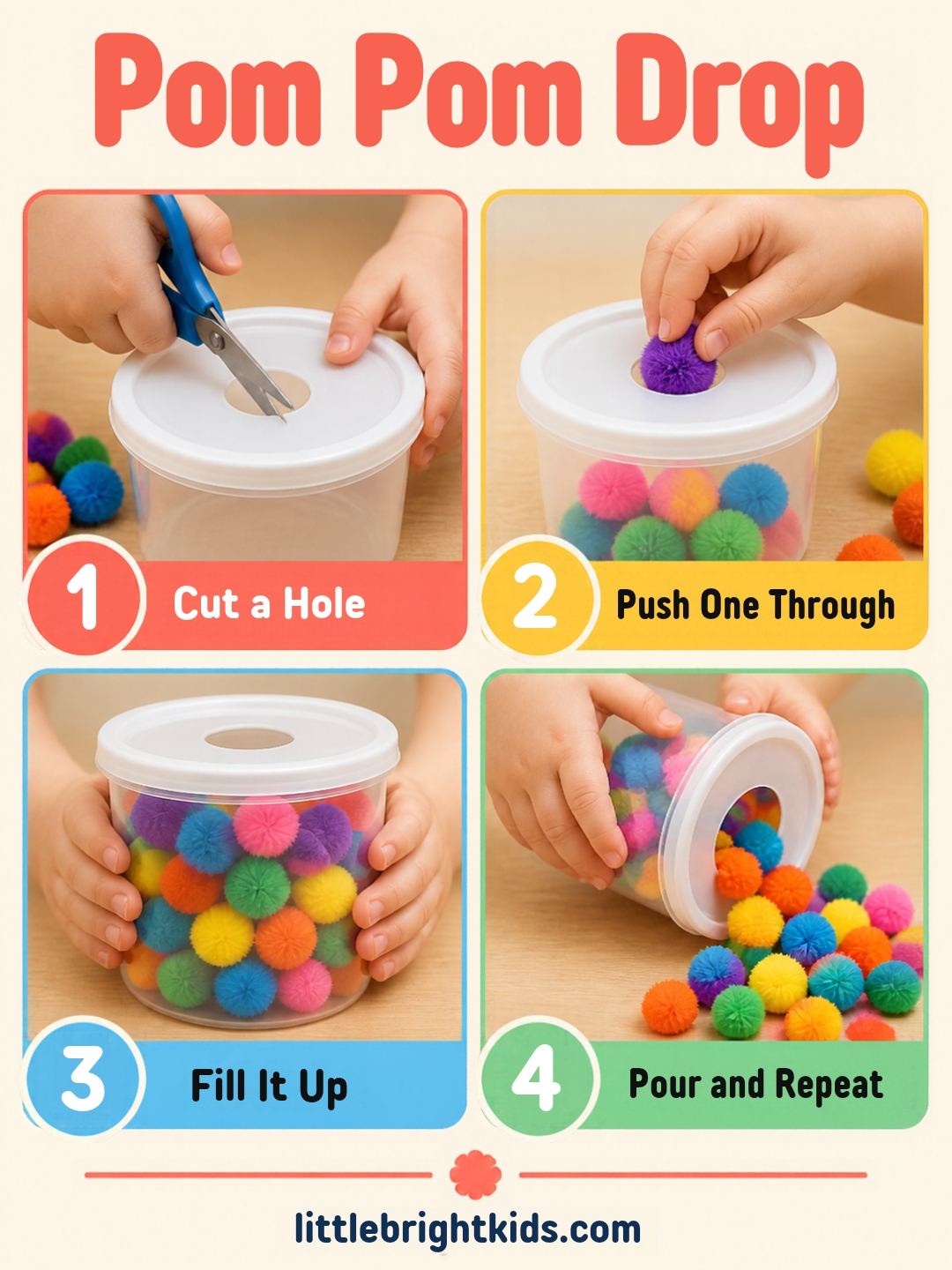
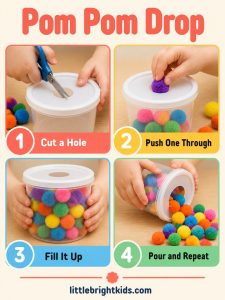
Pom pom drop is a simple toddler activity made from a container, a lid and a bag of pom poms. You cut a hole slightly smaller than the pom poms, and your toddler pushes them through one by one. Opening the lid and pouring them out to start again keeps them busy for a long time.
What your child learns: Pushing a soft pom pom through a tight hole builds finger strength, hand and eye coordination and patience. It also teaches cause and effect as each pom pom disappears.
Make it easier or harder: Make the hole bigger for young toddlers. Older children can sort pom poms by color into different containers or use tongs to pick them up.
How to do Pom Pom Drop
- Cut a hole in the lid of a container, a little smaller than your pom poms.
- Show your toddler how to push one pom pom through.
- Let them fill the whole container.
- Open the lid, pour them out and start again.
💡 Use large pom poms only, and put them away after play.
2. Sticker Lines
Peeling a sticker is real work for small fingers. Placing it on a line adds hand and eye control.
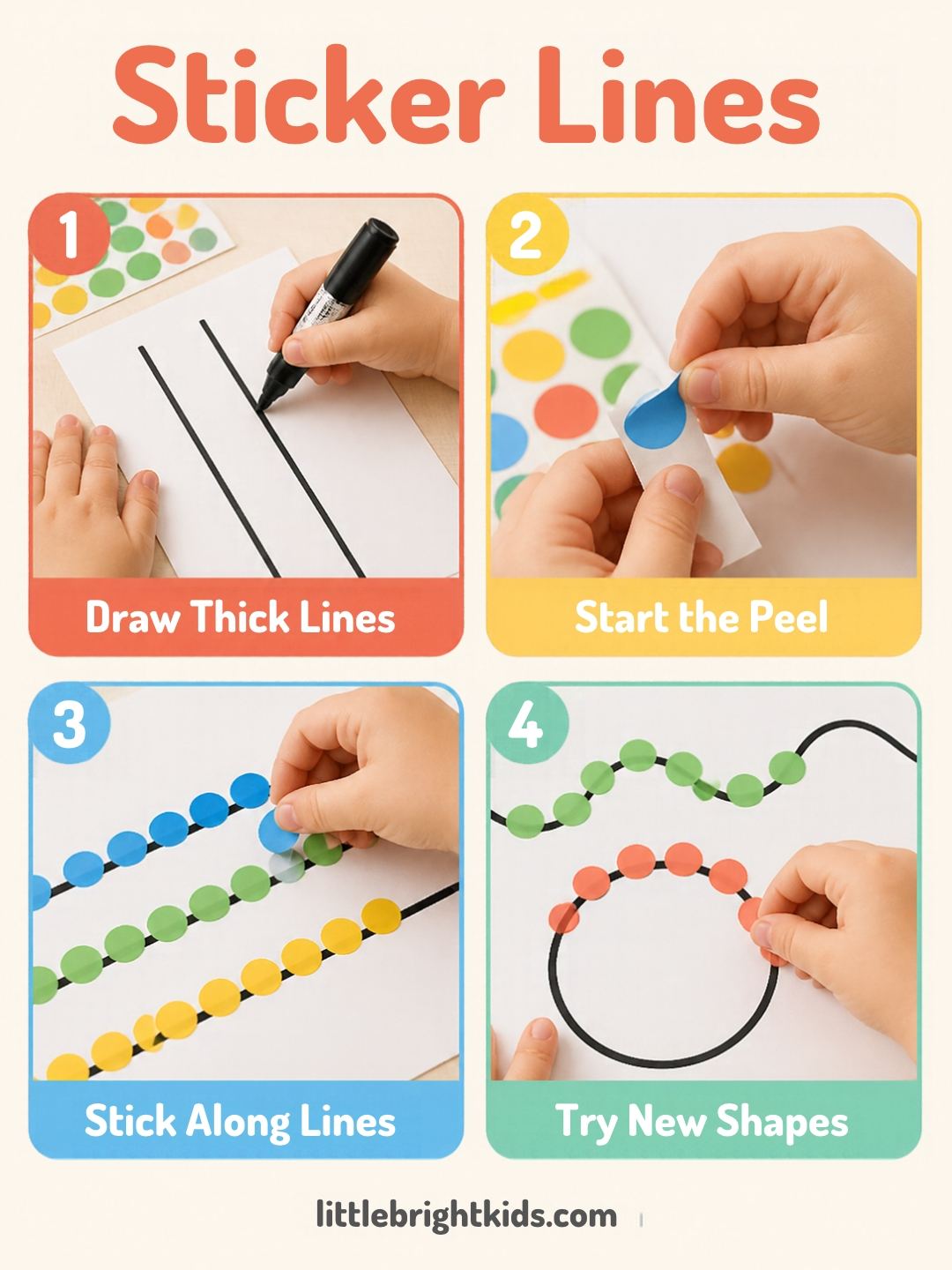
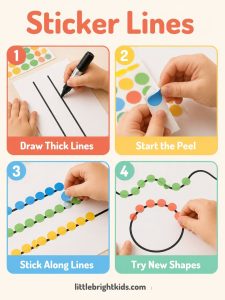
Sticker lines turn a sheet of stickers into a fine motor workout. Draw a few thick lines on paper, peel the edge of each sticker to help your toddler start, and let them stick the stickers along each line.
What your child learns: Peeling stickers uses the pincer grip, and placing them on a line builds control and visual tracking. These are the same skills children use later for writing.
Make it easier or harder: Use big stickers and straight lines for young toddlers. Older children can follow wavy lines, zigzags, circles or even the shape of a letter.
How to do Sticker Lines
- Draw a few thick straight lines on paper.
- Peel the edge of each sticker a little to help your toddler start.
- They peel and stick the stickers along each line.
- Try wavy lines or a big circle next time.
💡 Dot stickers from the office aisle are cheap and easy to peel.
3. Clothespin Clip Game
Squeezing a clothespin builds hand strength that toddlers need for scissors later on.
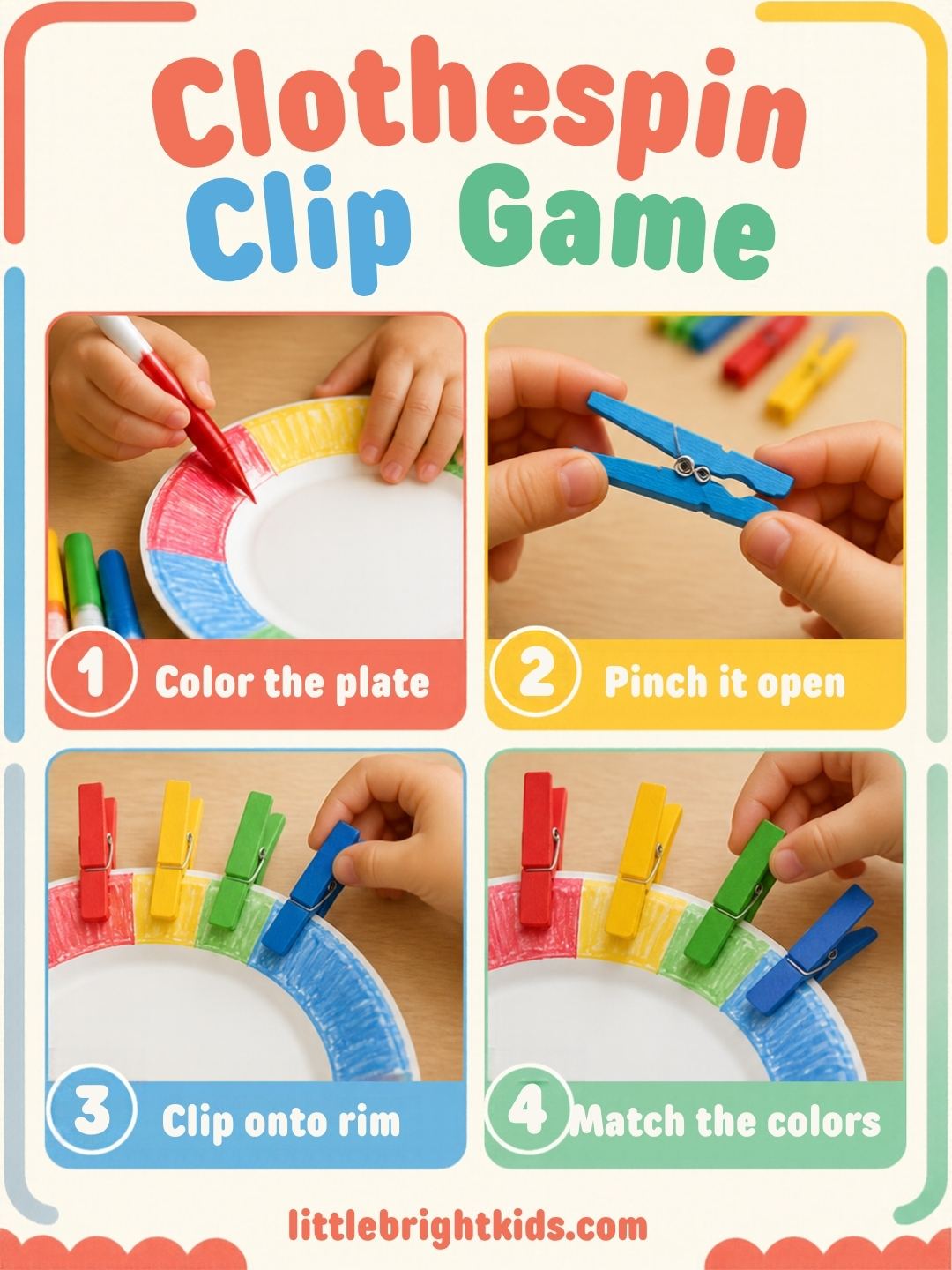
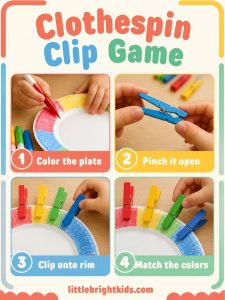
The clothespin clip game needs just a paper plate and a few clothespins. Color the edge of the plate in sections, show your child how to pinch a clothespin open, and let them clip each one onto the rim.
What your child learns: Pinching a clothespin strengthens the small muscles in the thumb and fingers, which helps with holding crayons and scissors. Matching colors adds early sorting skills.
Make it easier or harder: Use large, easy clothespins for toddlers. Older children can match colors, count the pins or clip them onto a string as a challenge.
How to do Clothespin Clip Game
- Color the edge of a paper plate in a few sections.
- Show your child how to pinch a clothespin open.
- They clip each clothespin onto the rim.
- Match clothespin colors to the plate colors for an extra challenge.
💡 If the clips are too stiff, start with lighter plastic ones.
🎈 Pause! Let us play for one minute
Before the next idea, here is a tiny game just for fun. Let your child tap the answers, and see who gets the prize first!
4. Pasta Threading
Threading takes two hands working together, which is a big step for toddlers.
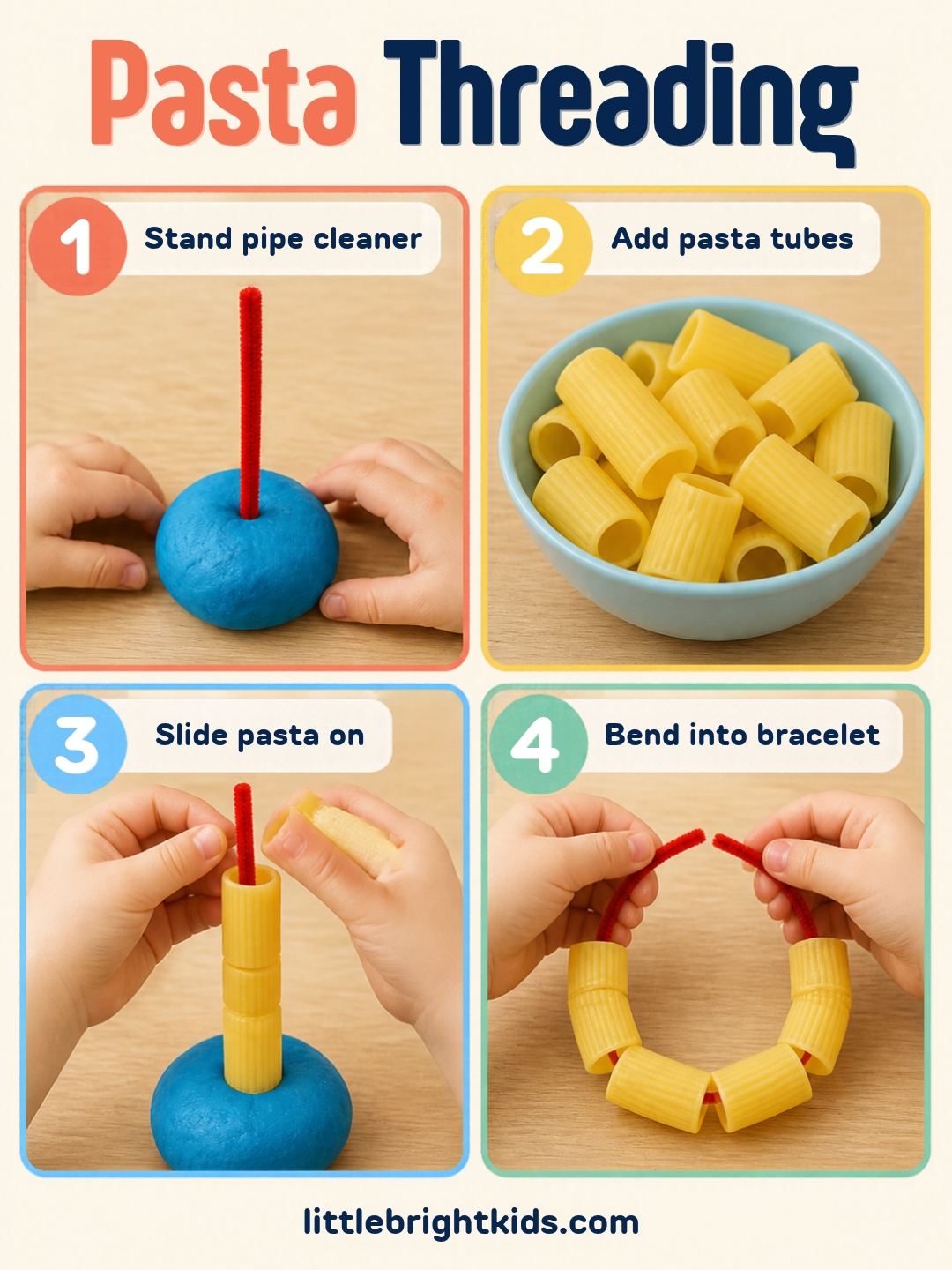
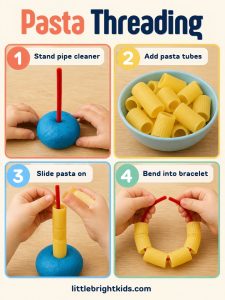
Pasta threading is easier than beads for little hands. Stand a pipe cleaner up in a ball of playdough so it stays still, give your toddler large pasta tubes and let them slide each piece on. Bend the ends together to make a necklace or bracelet.
What your child learns: Threading builds hand and eye coordination and teaches both hands to work together. Making jewelry they can wear gives toddlers a proud finish.
Make it easier or harder: Use very large pasta for younger toddlers. Older kids can color the pasta first and make a pattern while threading.
How to do Pasta Threading
- Stand a pipe cleaner up in a ball of playdough so it stays still.
- Give your toddler a bowl of large pasta tubes.
- They slide the pasta onto the pipe cleaner.
- Bend the ends together to make a necklace or bracelet.
💡 Color the pasta first with food coloring and a little vinegar for a rainbow necklace.
5. Playdough Pinch and Poke
Squishing, rolling and poking dough is a full workout for little fingers, and it is calming too.
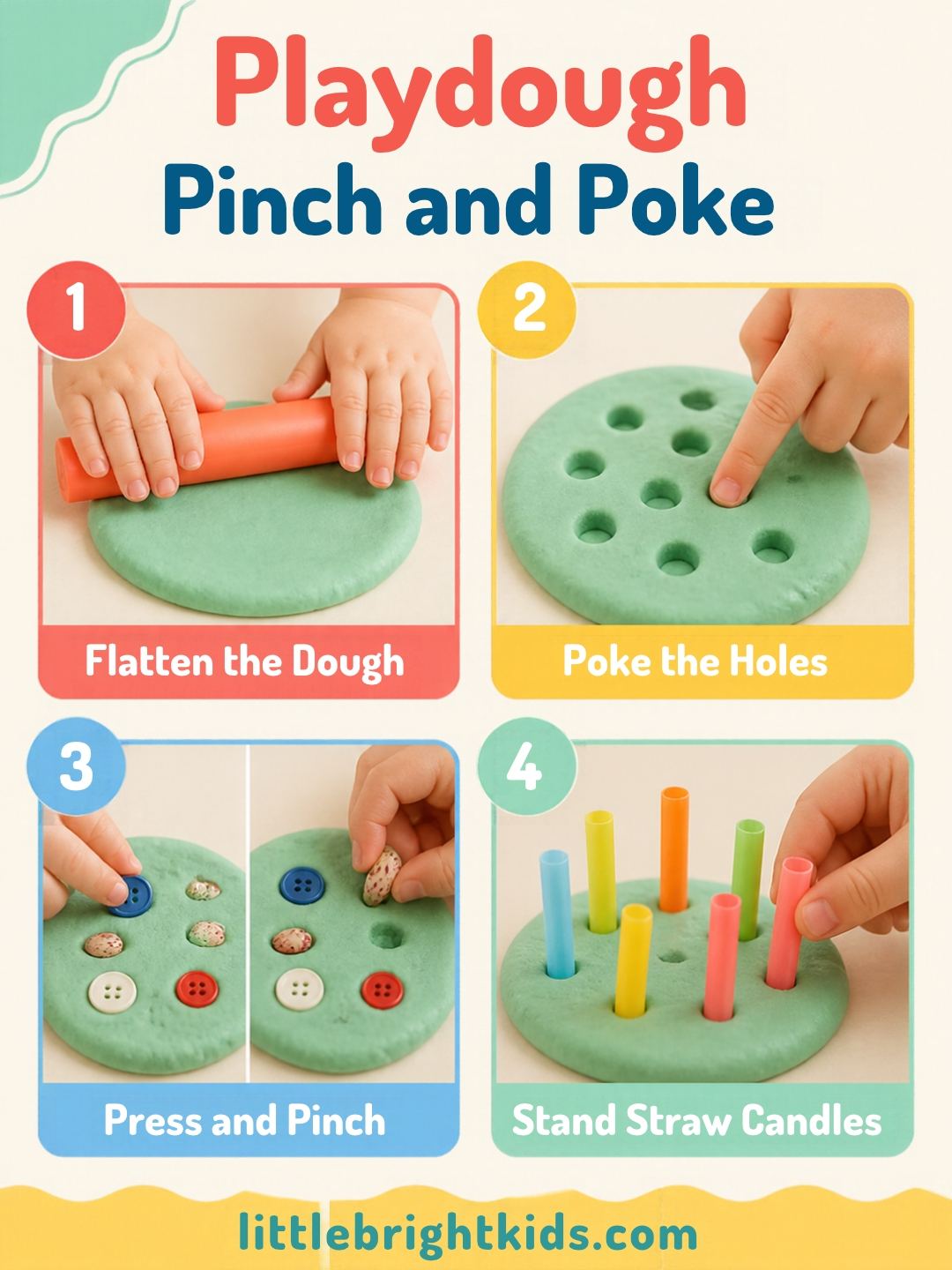
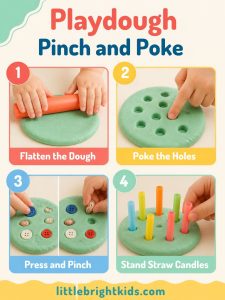
Playdough pinch and poke packs several fine motor skills into one tray. Roll the dough flat, poke holes with a finger, press buttons or beans in and pinch them back out. Short straw pieces become pretend birthday candles to finish.
What your child learns: Poking isolates single fingers, and pinching small objects out of dough strengthens the pincer grip. Pretend play with candles adds language and imagination.
Make it easier or harder: Use large buttons for young toddlers and supervise small items closely. Older children can count the candles or make a pattern with beans and buttons.
How to do Playdough Pinch and Poke
- Roll the playdough into a flat pancake.
- Show your toddler how to poke holes with one finger.
- Press buttons or beans into the dough, then pinch them back out.
- Cut straws into short pieces and stand them up like birthday candles.
💡 Make homemade playdough with flour, salt, oil and water. It takes 10 minutes.
5 ideas at a glance
| Activity | Ages | Time | Level |
|---|---|---|---|
| Pom Pom Drop | 18 months to 3 | 10 min | Easy |
| Sticker Lines | 2 to 3 | 10 min | Easy |
| Clothespin Clip Game | 2 to 3 | 10 min | Easy |
| Pasta Threading | 2 to 3 | 15 min | Easy |
| Playdough Pinch and Poke | 18 months to 3 | 15 min | Easy |
Easy fine motor activities for toddlers include a pom pom drop, sticker lines, a clothespin clip game, pasta threading and playdough pinch and poke. Each takes about 10 to 15 minutes with household items.
Free printables to practice at home
When your toddler is ready to hold a crayon, these simple sheets are a gentle next step.
Tips for fine motor play with toddlers
Let your toddler lead. If they want to dump the pom poms instead of dropping them, that is still learning. Join in and try again later.
Keep sessions short and stop before frustration starts. Five happy minutes count.
Rotate the activities. Put one away for a few days and it will feel brand new when it comes back.
Questions parents ask
What are fine motor skills in toddlers?
Fine motor skills are the small movements of the hands and fingers, like picking up a small item, turning pages, stacking blocks or holding a crayon.
At what age should I start fine motor activities?
You can start simple ones like stacking and posting toys around 12 to 18 months. The activities in this post work well from about 18 months to 3 years.
How can I improve my toddler’s fine motor skills at home?
Offer daily hands-on play: playdough, stickers, threading, clothespins, tearing paper and scooping. Short, fun practice every day works best.
Are these activities safe?
Yes, with an adult nearby. Use large items and skip small pieces like beans or buttons if your child still mouths toys.