

Toddlers learn with their hands. Squishing, pouring, scooping and splashing all build the brain and the fine motor skills they need later.
These 10 sensory play ideas use kitchen basics like rice, flour, water and cornstarch. Lay down a towel, stay close, and let the exploring begin.
1. Rainbow Rice Bin
Colorful rice is the classic sensory bin and lasts for months in a sealed box.
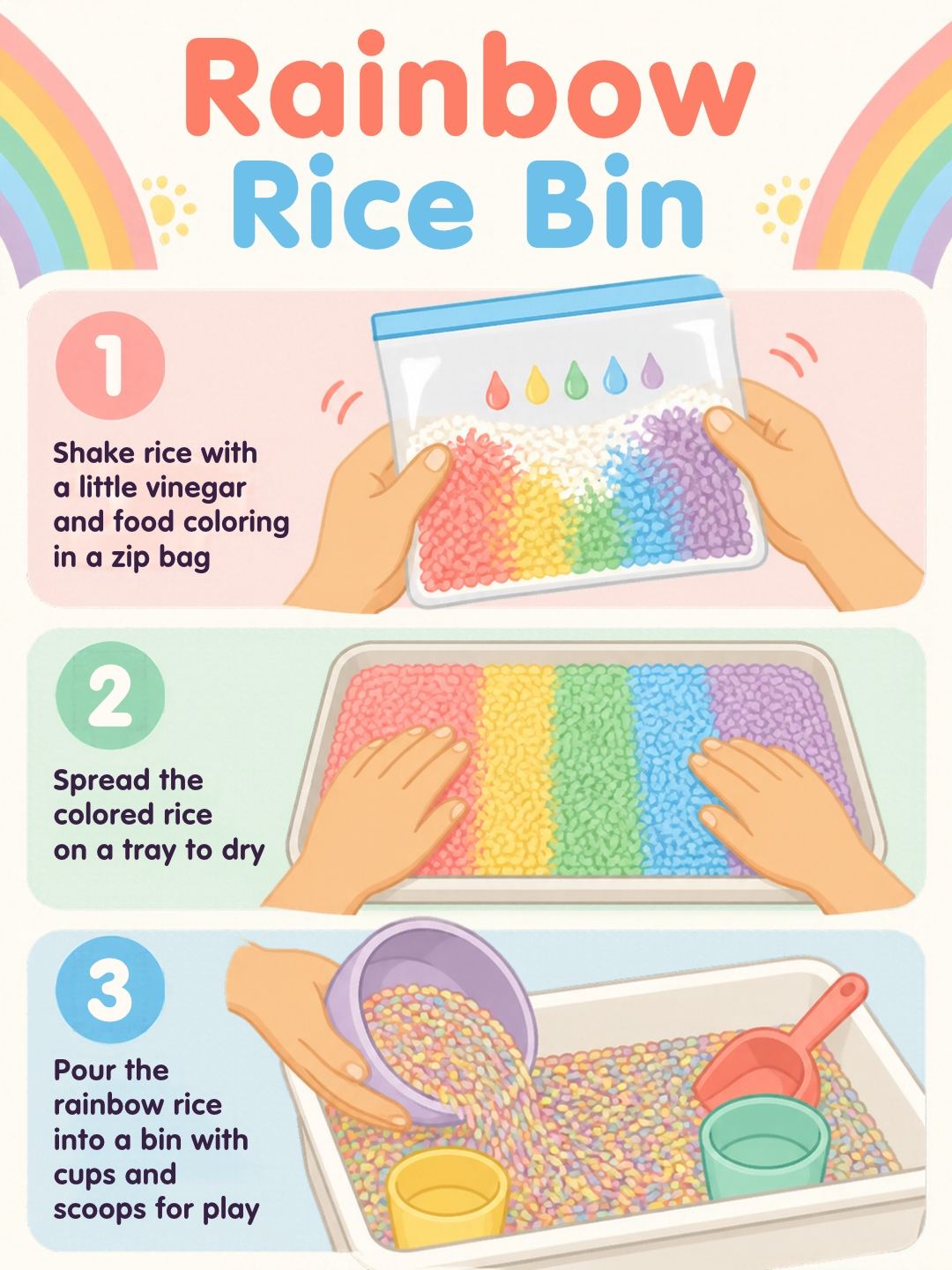
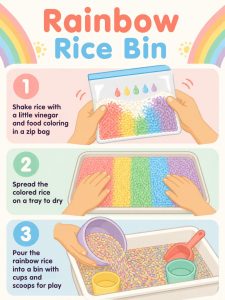
A rainbow rice bin is one of the most loved sensory play ideas for toddlers. Shake rice with a little vinegar and food coloring in a bag, spread it out to dry, then pour it into a tub with scoops and cups.
What your child learns: Scooping and pouring build hand strength and coordination, and the bright colors invite color naming. Sensory play like this also helps toddlers calm and focus.
Make it easier or harder: Use bigger scoops for young toddlers and stay close, since rice is a choking risk. Older toddlers can hide small toys and dig for them.
How to make Rainbow Rice Bin
- Shake rice with a little vinegar and food coloring in a bag.
- Spread it out to dry for an hour.
- Pour it into a tub with cups and spoons.
- Hide small toys to dig for.
2. Homemade Playdough
Soft, safe and cheap, homemade dough is the best squish toy there is.
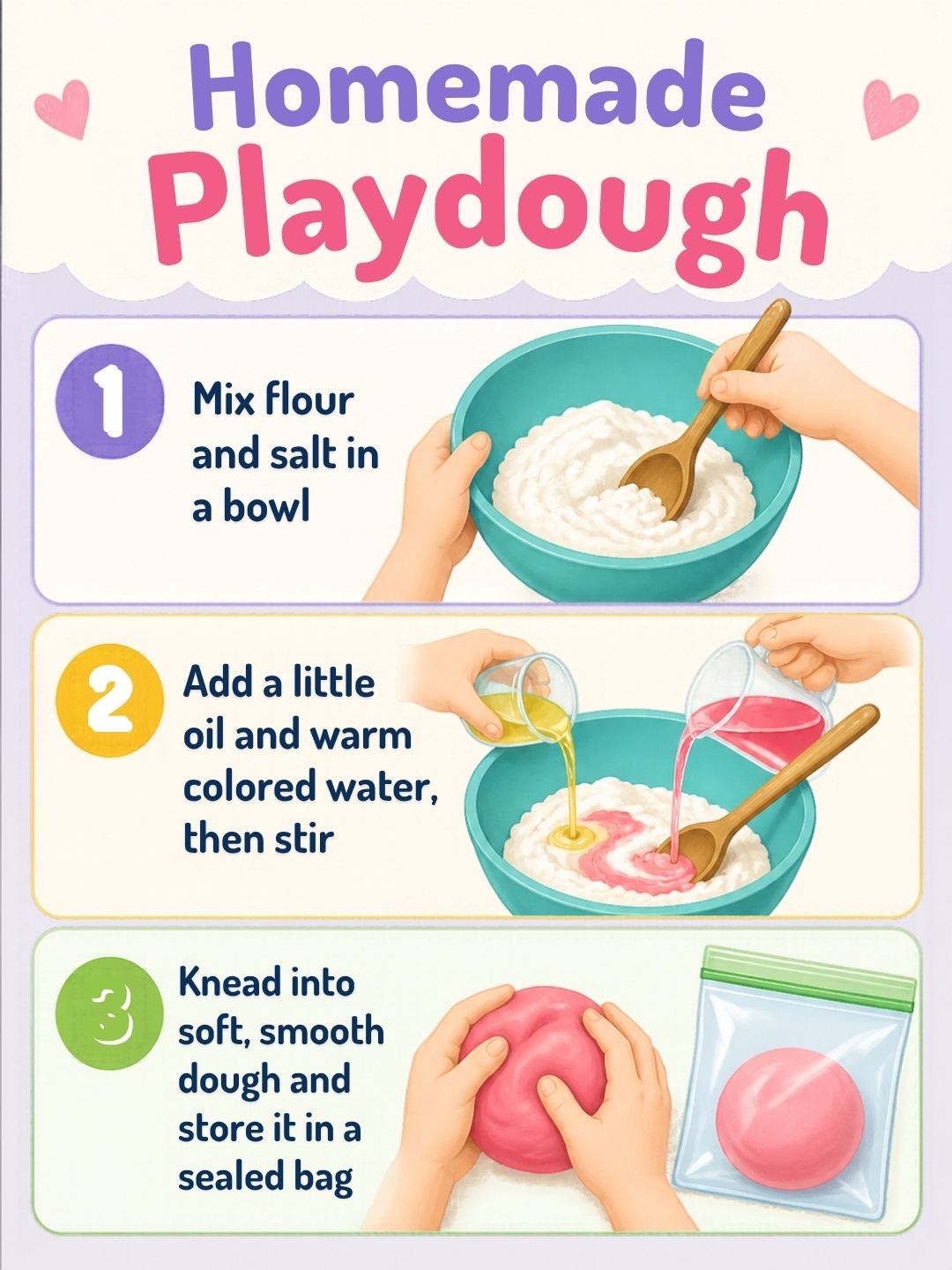
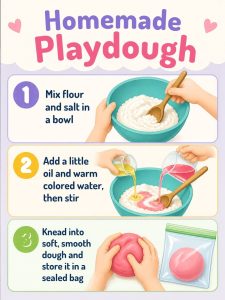
Homemade playdough is soft, cheap and quick to make. Mix 2 cups flour and half a cup of salt, add 2 tablespoons of oil and about three quarters of a cup of warm water with food coloring, then knead until smooth.
What your child learns: Squeezing, rolling and pinching dough strengthens the small hand muscles toddlers later use for holding crayons and spoons.
Make it easier or harder: Give younger toddlers just a ball of dough and their hands. Older ones can use cookie cutters, rolling pins and plastic knives.
How to make Homemade Playdough
- Mix 2 cups flour and ½ cup salt.
- Add 2 tbsp oil and about ¾ cup warm water with coloring.
- Knead until smooth and soft.
- Store it in a sealed bag.
3. Oobleck
It feels solid when you squeeze it and runs like liquid when you let go. Pure toddler magic.
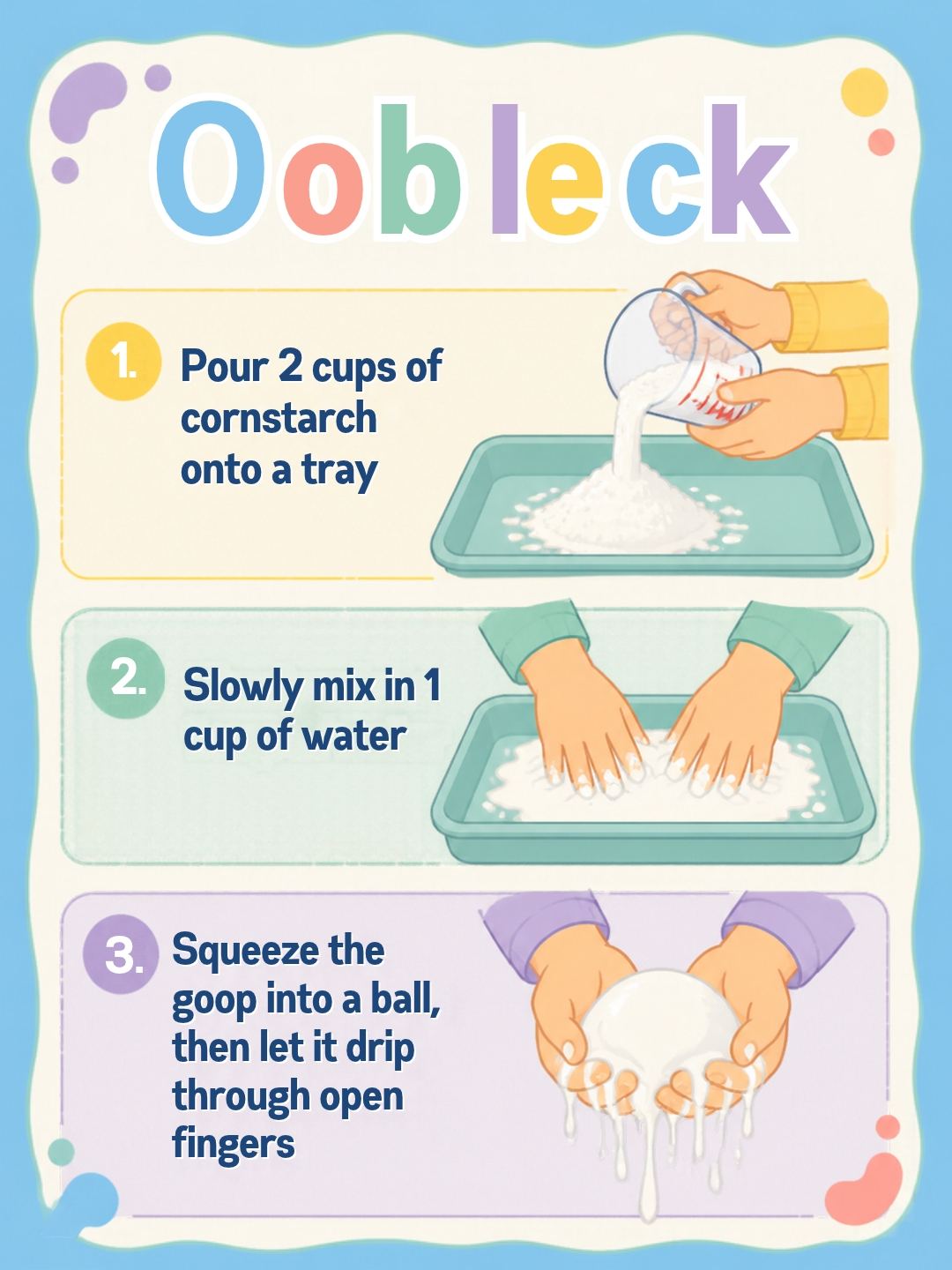
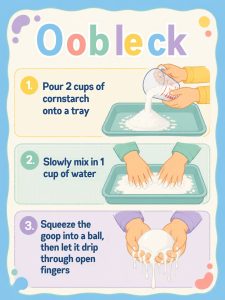
Oobleck is a gooey mix that acts like a solid and a liquid at the same time. Mix 2 cups cornstarch with 1 cup water on a tray and let your toddler squeeze, poke and pour it.
What your child learns: Toddlers discover that it turns hard when squeezed and runny when relaxed, a fun first science surprise. It is also very calming to touch.
Make it easier or harder: Use a tray with sides and old clothes. Older toddlers can add a drop of food coloring and toy animals.
How to make Oobleck
- Mix 2 cups cornstarch with 1 cup water on a tray.
- Let your toddler squeeze, poke and pour it.
- Add a drop of color if you like.
🎈 Pause! Let us play for one minute
Before the next idea, here is a tiny game just for fun. Let your child tap the answers, and see who gets the prize first!
4. Bubble Foam Bin
A tub full of fluffy foam is a giant hit on rainy days.
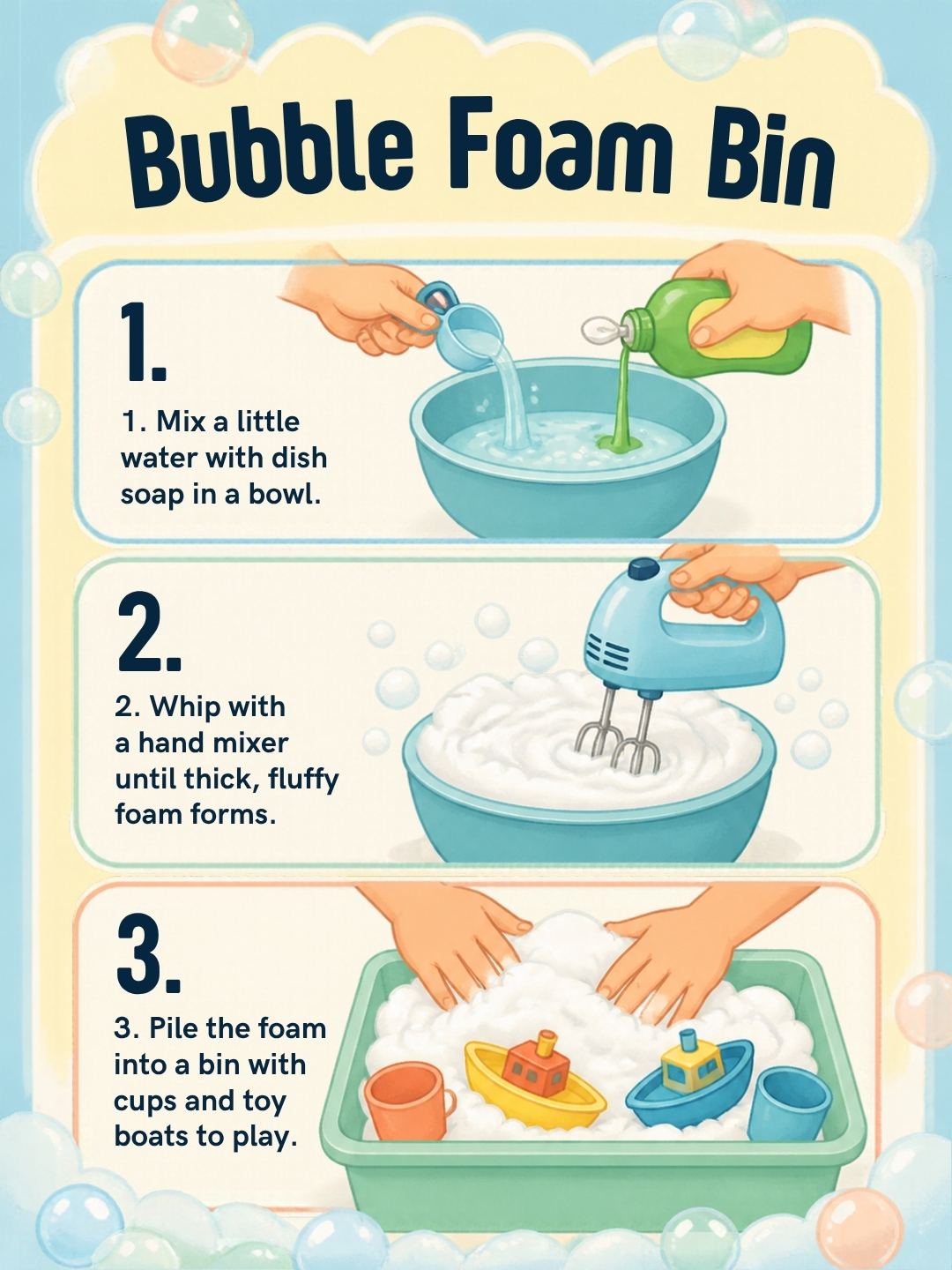
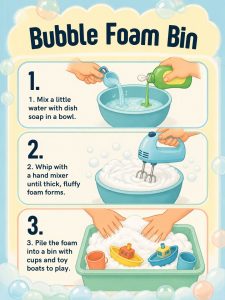
A bubble foam bin is fluffy, mess-friendly fun. Mix a quarter cup of water with 2 tablespoons of dish soap, whip it with a mixer until foamy and pour it into a tub with cups and toys.
What your child learns: Scooping light foam is gentle sensory play that builds hand control. Hiding toys in foam adds a search game.
Make it easier or harder: Keep it away from eyes and supervise closely. Older toddlers can add color and make foam towers.
How to make Bubble Foam Bin
- Mix ¼ cup water with 2 tbsp dish soap.
- Whip with a mixer until foamy.
- Pour into a tub with toys and scoops.
💡 Use gentle baby soap for sensitive skin.
5. Ice Painting
Frozen paint cubes glide over paper and melt into new colors.

Ice painting combines art with a bit of science. Fill an ice tray with water and a little washable paint, add a craft stick to each cube, freeze and paint on thick paper as the ice melts.
What your child learns: Holding the stick builds grip, and toddlers see ice melt into color as they paint.
Make it easier or harder: Use thick paper so it does not tear. Older ones can mix two colors and see what new color appears.
How to make Ice Painting
- Fill an ice tray with water and a little washable paint.
- Add a craft stick to each cube and freeze.
- Paint on thick paper and watch the colors mix.
6. Oat Dig Bin
Oats are taste-safe, so they work for little ones who still mouth things.
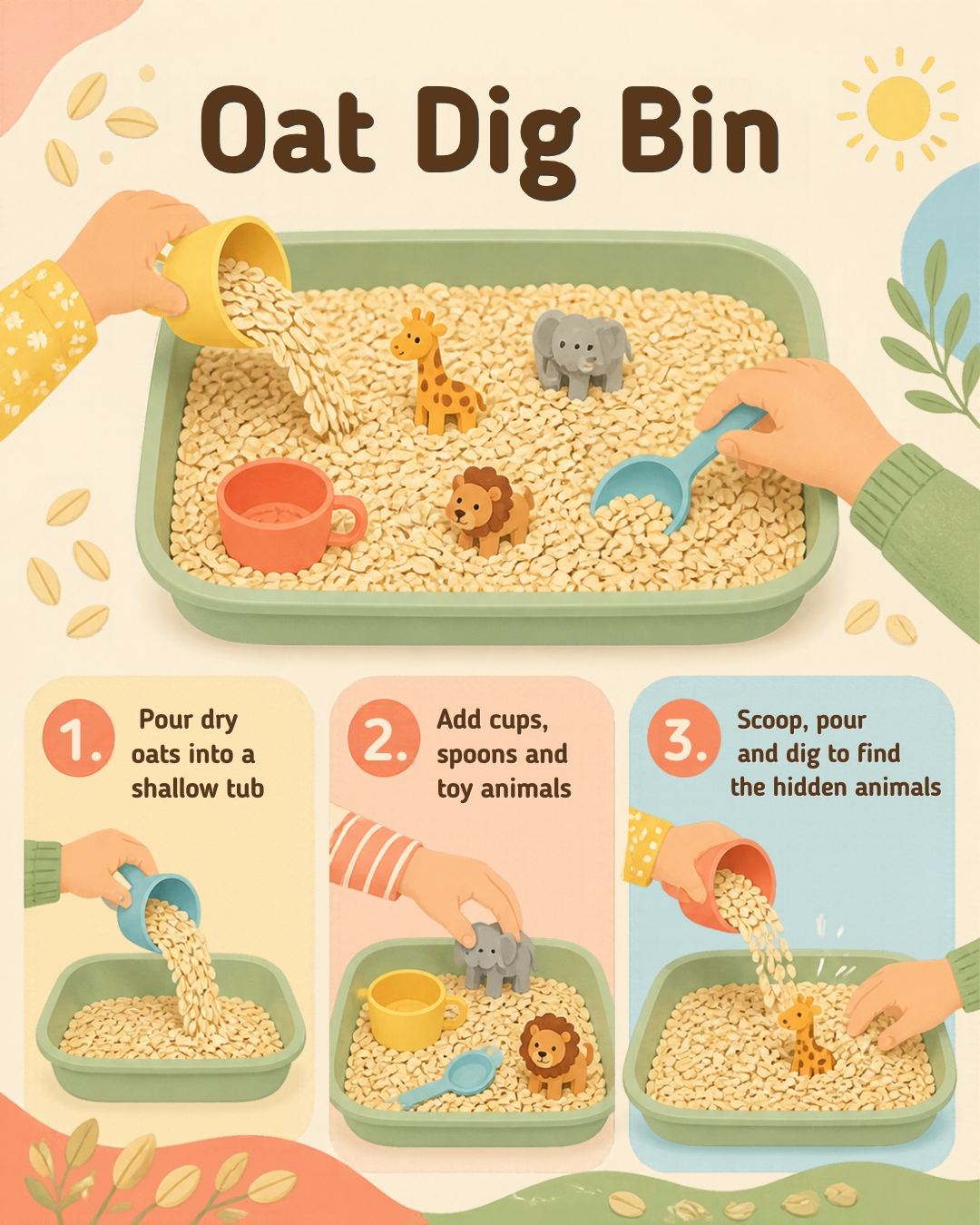
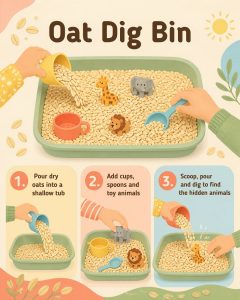
An oat dig bin is a taste-safe sensory bin for younger toddlers. Pour dry oats into a shallow tub, add cups, spoons and toy animals, then bury and dig.
What your child learns: Burying and finding toys builds object permanence and problem solving. Scooping and pouring support hand control.
Make it easier or harder: Use big toys for young toddlers. Older toddlers can sort the animals or count what they find.
How to make Oat Dig Bin
- Pour dry oats into a shallow tub.
- Add cups, spoons and toy animals.
- Bury and dig, scoop and pour.
7. Water Play Station
Water play is calming and keeps toddlers busy for a long time.
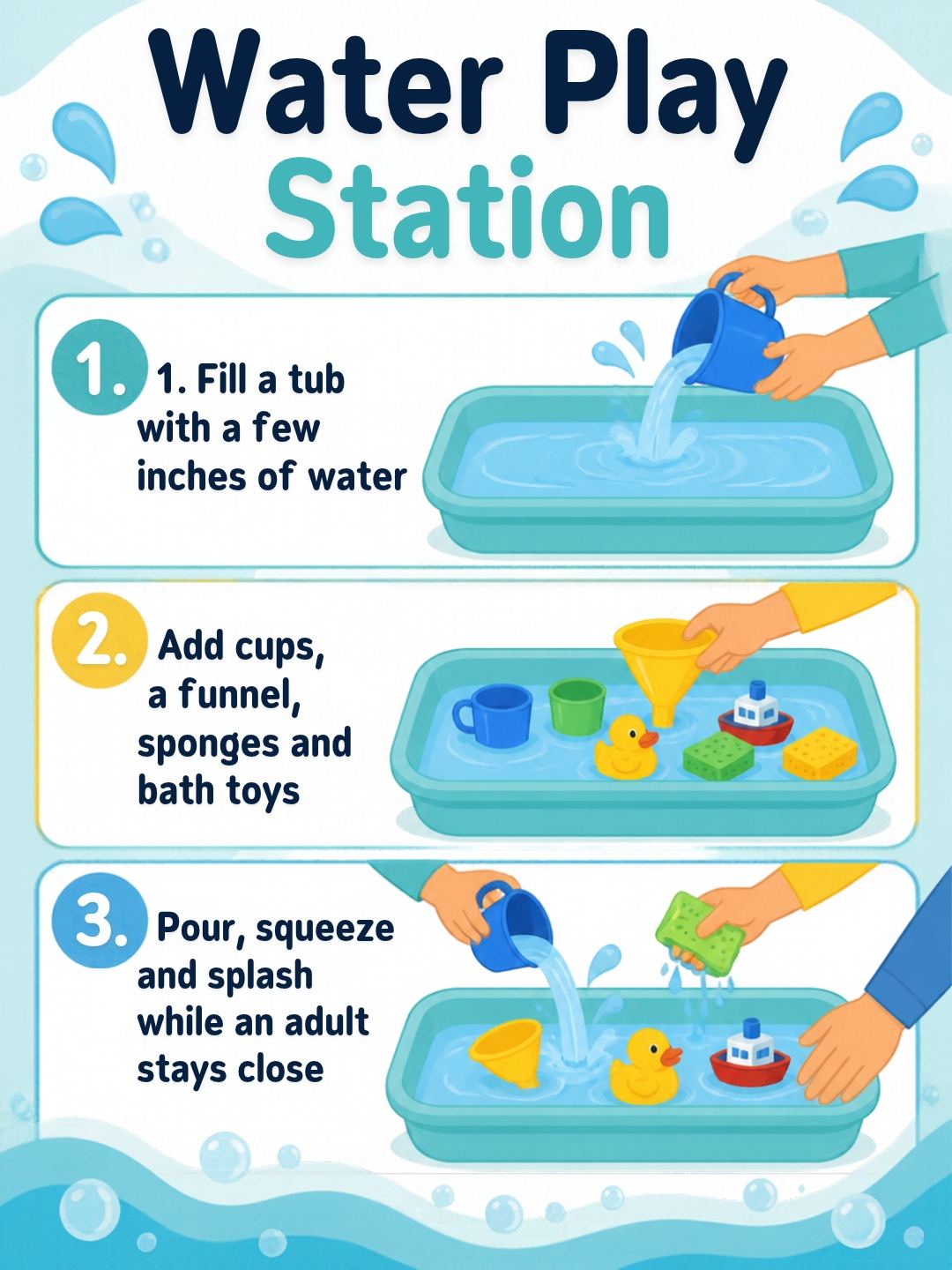
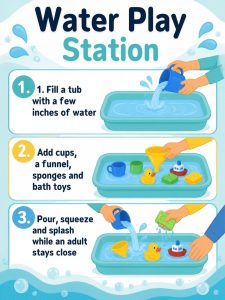
A water play station keeps toddlers busy for a long time. Fill a tub with a few inches of water, add cups, a funnel, sponges and bath toys, and let them pour and splash.
What your child learns: Pouring and squeezing sponges build hand strength, and toddlers explore full, empty, floating and sinking.
Make it easier or harder: Always stay right beside toddlers near water. Older ones can test which toys float and which sink.
How to make Water Play Station
- Fill a tub with a few inches of water.
- Add cups, a funnel, sponges and bath toys.
- Let them pour, squeeze and splash. Stay close the whole time.
8. Cooked Pasta Play
Slippery colored pasta is a fun texture and safe for little mouths.
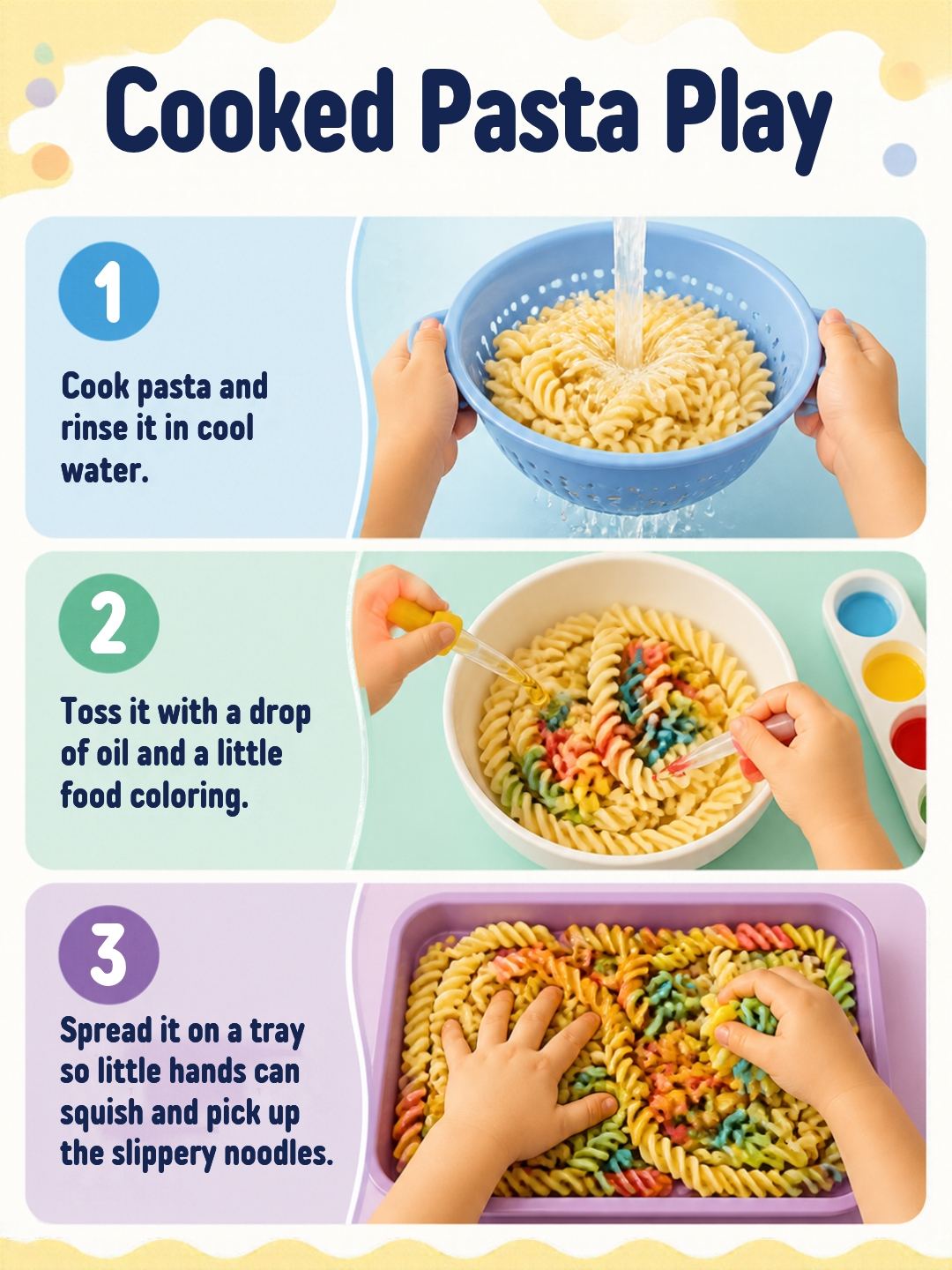
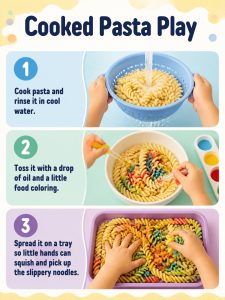
Cooked pasta play is slippery, colorful and taste-safe. Cook pasta and rinse it in cool water, toss it with a drop of oil and food coloring, then spread it on a tray to squish and explore.
What your child learns: Slimy textures help toddlers get used to new sensations, which can support picky eaters too. Picking up noodles builds the pincer grip.
Make it easier or harder: Use large pasta shapes for young toddlers. Older ones can sort by color or thread pasta onto string.
How to make Cooked Pasta Play
- Cook pasta and rinse in cool water.
- Toss with a drop of oil and food coloring.
- Spread on a tray and let them squish and sort.
9. Paint in a Bag
All the fun of finger painting with zero mess.
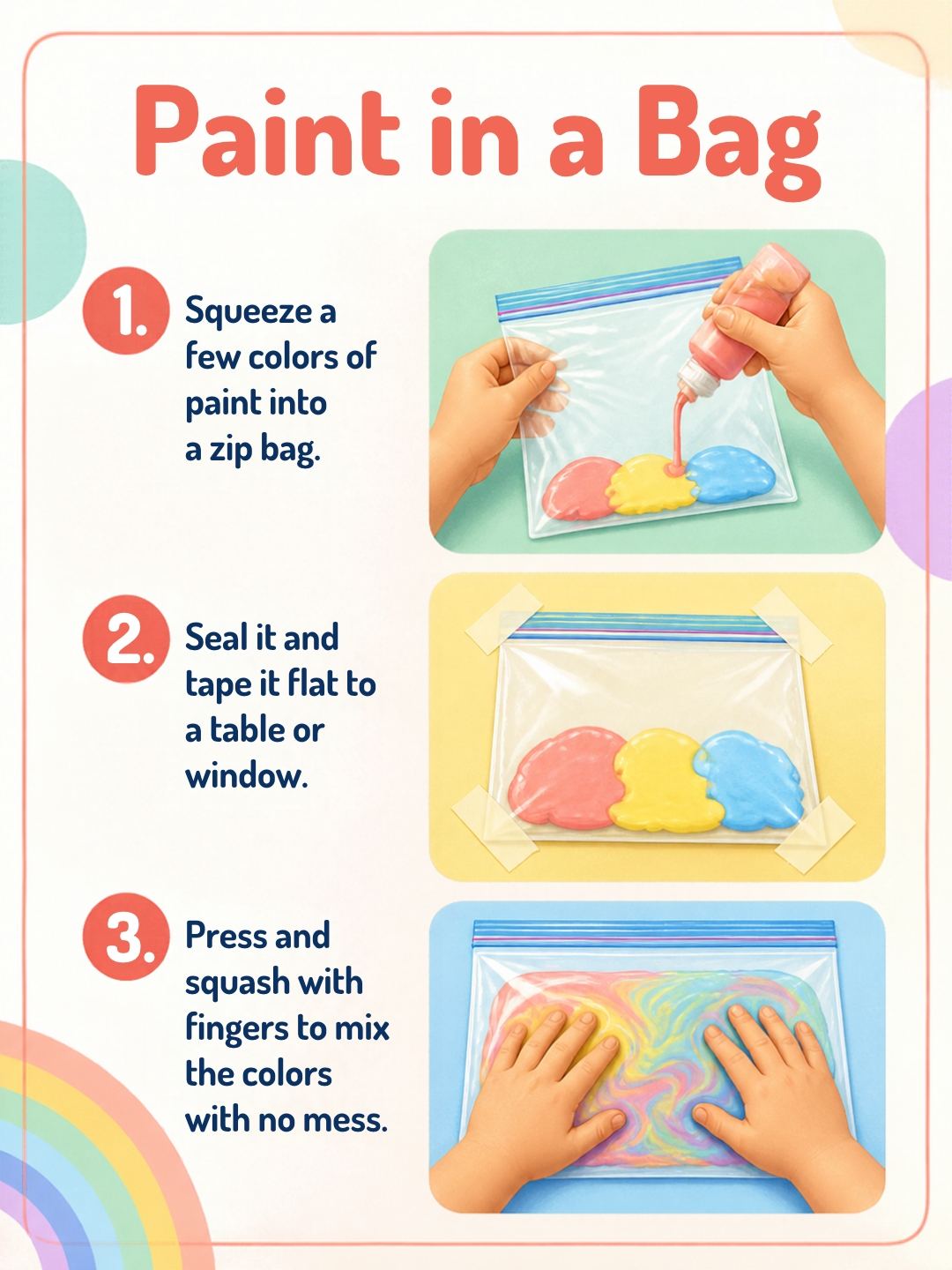
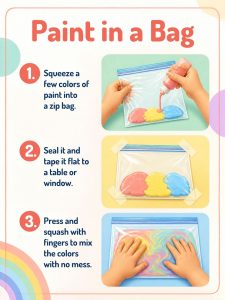
Paint in a bag is mess-free painting. Squeeze a few colors of paint into a zip bag, seal it, tape it to a table or window and let your toddler press and swirl the colors.
What your child learns: Pressing and tracing builds finger control, and toddlers watch colors mix without any mess.
Make it easier or harder: Double bag and tape the top for safety. Older toddlers can draw shapes or letters with a finger.
How to make Paint in a Bag
- Squeeze a few colors of paint into a zip bag.
- Seal it and tape it to a table or window.
- Let your toddler squish the colors together.
10. Nature Sensory Tray
Bringing the outdoors in gives toddlers new textures to touch and talk about.
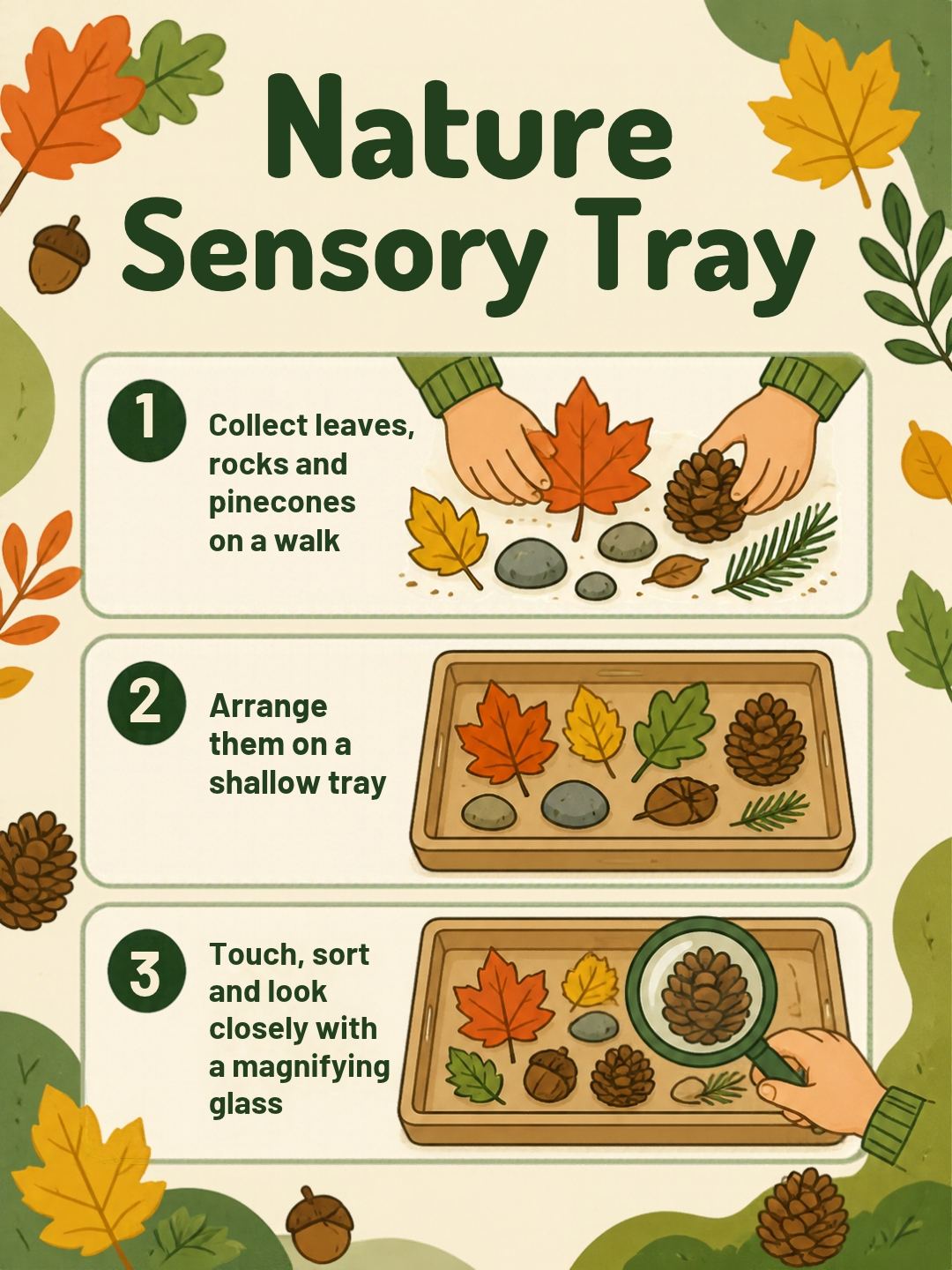
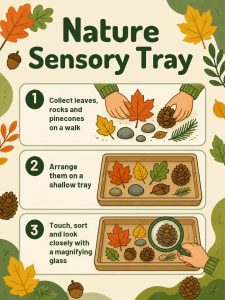
A nature sensory tray brings the outdoors inside. Collect leaves, rocks and pinecones on a walk, arrange them on a tray and touch each one while you talk about how it feels.
What your child learns: Describing rough, smooth, soft and bumpy builds vocabulary. Sorting natural items introduces early science.
Make it easier or harder: Choose large items for young toddlers and supervise. Older ones can sort by size or texture.
How to make Nature Sensory Tray
- Collect leaves, rocks and pinecones on a walk.
- Arrange them on a tray.
- Touch each one and talk: rough, smooth, soft, bumpy.
10 ideas at a glance
| Activity | Ages | Time | Level |
|---|---|---|---|
| Rainbow Rice Bin | 2 to 3 | 15 min | Easy |
| Homemade Playdough | 18 months to 3 | 15 min | Easy |
| Oobleck | 2 to 3 | 10 min | Easy |
| Bubble Foam Bin | 18 months to 3 | 15 min | Easy |
| Ice Painting | 2 to 3 | 15 min | Easy |
| Oat Dig Bin | 12 months to 3 | 10 min | Easy |
| Water Play Station | 18 months to 3 | 20 min | Easy |
| Cooked Pasta Play | 18 months to 3 | 15 min | Easy |
| Paint in a Bag | 12 months to 3 | 10 min | Easy |
| Nature Sensory Tray | 2 to 3 | 15 min | Easy |
Easy sensory play ideas for toddlers include a rainbow rice bin, homemade playdough, oobleck, a bubble foam bin and ice painting. Each takes 10 to 20 minutes with kitchen basics.
Free printables to practice at home
Keep a few printables ready for calm time after sensory play.
Tips for stress-free sensory play
Put a big towel or shower curtain under the bin. Cleanup takes one minute.
Start with a small amount of material. You can always add more.
Stay close and choose taste-safe options like oats and cooked pasta for children who still mouth toys.
Questions parents ask
What is sensory play?
Sensory play is any activity that lets children explore with their senses: touch, sight, sound, smell and taste. It supports language, fine motor skills and calm focus.
At what age can toddlers do sensory bins?
Many toddlers enjoy simple, taste-safe bins from around 12 to 18 months with an adult right beside them.
How do I keep sensory play less messy?
Use a shallow tub on a towel, offer small amounts, and set a simple rule that the material stays in the bin.